Start Here: What False Lash Tools for Beginners Actually Cover
If you are new to temporary lashes, it helps to think in terms of a small toolkit rather than a single product. The best false lash tools for beginners make the process easier at every step: measuring, trimming, placing, securing, and removing the lashes without unnecessary frustration.
For most first-timers, the learning curve is less about makeup skill and more about having the right helpers within reach. A good tool set can reduce mess, help lashes sit closer to the natural lash line, and make the whole routine feel more manageable. You do not need a huge collection to begin. In fact, a few well-chosen essentials are usually enough.
Because temporary false eyelashes come in many shapes and styles, beginner tools should be simple, easy to clean, and comfortable to handle. The goal is not perfection on the first try. The goal is a smoother application experience and a better chance of getting the look you want without wasting lash strips or adhesive.
When shopping for beginner-friendly tools, focus on usability. Look for items that help you grip small pieces, control glue, and remove lashes gently. Those features matter more than flashy packaging or extra accessories you may never use.
Tweezers and Lash Applicators: The Main Gripping Tools
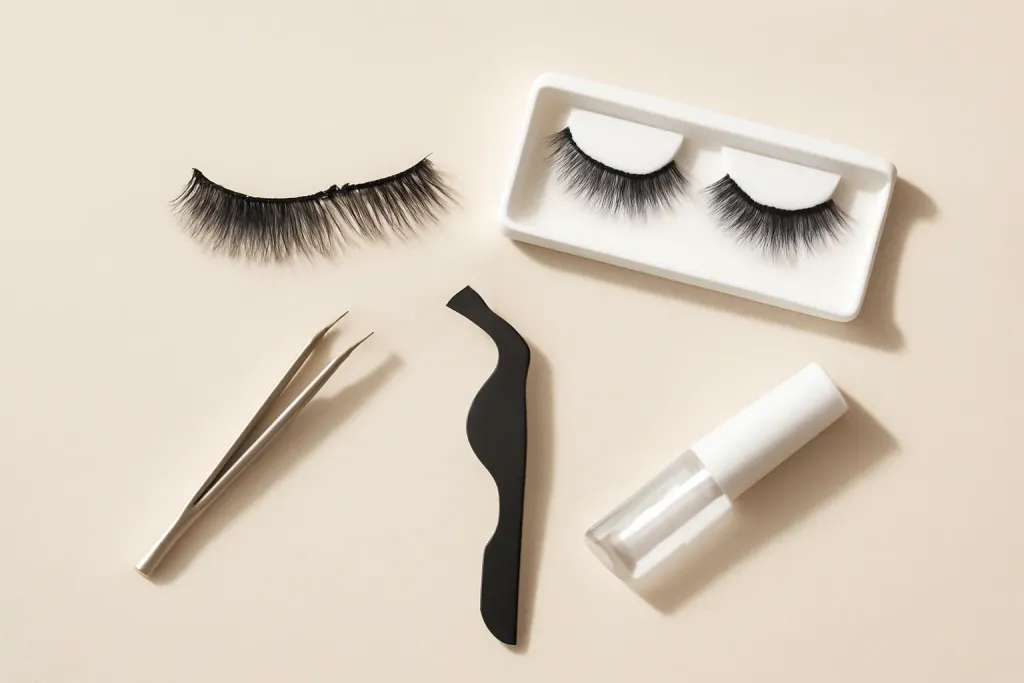
One of the most useful purchases for new lash users is a reliable pair of tweezers or a lash applicator. These tools help you lift the strip from the tray, position it more accurately, and make small adjustments once it is near the lash line. They are especially helpful if your fingers feel too large for the job or if the lash strip keeps sticking to itself.
There are a few styles you may see. Straight tweezers can be useful for separating natural lashes and picking up tiny bits of adhesive or individual cluster pieces. Curved lash applicators are designed with lash strips in mind and may make placement feel more intuitive. Some versions have a wider grip or a spoon-like tip that can help cradle the strip while you move it into position.
For beginners, comfort matters. A tool that feels balanced in your hand can make the process calmer and less slippery. It also helps to choose a tip that is precise but not overly sharp, since you want control without fussing over tiny movements. If you are applying lashes for the first time, practice opening and closing the tool before you bring it near your eyes.
Clean tools are just as important as good ones. After use, wipe away adhesive residue so the grip stays smooth and the tips do not get sticky. A simple applicator can become much more effective when it is kept clean and stored carefully.
Mirror and Lighting Tools That Make Application Easier
Good lighting is one of the most underrated lash tools for beginners. Even a great pair of lashes can be difficult to place if you cannot clearly see the lash line. A bright, steady light helps you check placement, spot stray adhesive, and compare both eyes as you work.
A compact mirror is equally helpful. Many beginners prefer a small handheld mirror that can sit below the face so you can look slightly downward while applying the lash strip. This angle often makes it easier to see the base of the natural lashes and get closer to the line without blocking your view with your fingers.
Some people also like a magnifying mirror for detail work, though it is not required. The main point is clarity. If your bathroom lighting is dim or uneven, moving to a brighter spot can make a noticeable difference. Natural daylight near a window can also be useful when you are learning, as long as it gives you enough visibility.
When it comes to false lash tools for beginners, a mirror may not seem glamorous, but it can dramatically reduce guesswork. Better visibility means fewer repositioning attempts, less glue clutter, and a more relaxed application routine overall.
Trimming Tools: Small Scissors and Lash Sizing Helpers
Not every lash strip fits every eye shape right out of the box. That is why trimming tools are essential. A small pair of precision scissors can help you shorten a lash band or adjust the outer edge so it sits more comfortably along your lash line. For beginners, the most important thing is making small, careful cuts rather than removing too much at once.
If a lash strip is too long, it may lift at the inner or outer corners, which can affect comfort and appearance. Trimming helps the band follow your eye shape more naturally. Some beginner kits also include a ruler-like sizing guide or a case that helps you compare lash length before you cut. Even without a special guide, a simple trial hold against the eye, without adhesive, can help you estimate the best size.
It is smart to cut from the outer end gradually and keep the lash shape balanced. If a pair is too dramatic for your first attempt, trimming can make it more wearable without changing the overall style entirely. Use scissors only for lashes and packaging tasks, not for general makeup use, so the edges stay clean and controlled.
Because false lash tools for beginners should reduce mistakes, a good trimming setup can save time and help your lashes feel more natural once applied.
Browse our recommended products
Our featured picks refresh periodically. While we update them, our editorial guides can help you find the right pick.
See our guides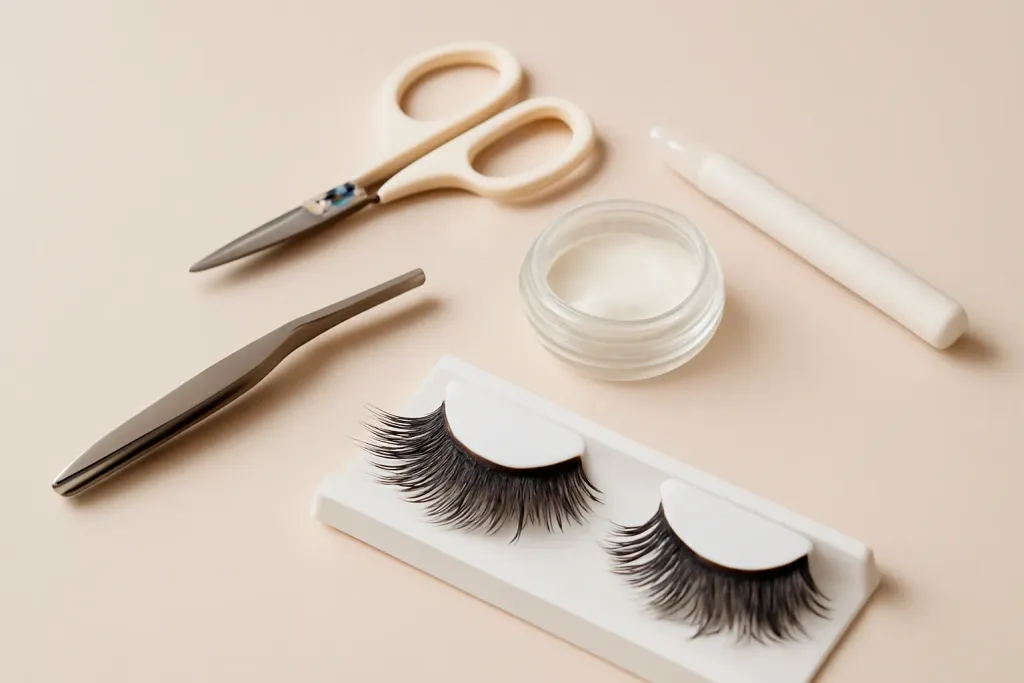
Glue and Adhesive Tools: Controlling the Mess
Adhesive control is one of the biggest challenges for first-time lash users. That is why beginner toolkits often include items that help with glue placement and handling. A lash adhesive with a fine applicator can make it easier to apply a thin, even line along the band without overloading it. Some users also like a small glue tray or palette that lets them place a tiny amount of adhesive and work from there.
Using too much adhesive can make lashes harder to position and clean up. Using too little can keep them from staying in place as intended. The sweet spot is usually a thin, even coat that gives the band enough tack without clumping. A clean applicator tip or precision nozzle can help you get closer to that balance.
Some beginners find it helpful to let the adhesive become slightly tacky before placement, rather than attaching the lash immediately. A small fan or hand fan can also be useful for encouraging the glue to set on the band before you apply it. These are simple tools, but they can make the process feel more controlled.
Keep in mind that sensitivity varies from person to person. If adhesive or fumes bother your eyes, stop using the product and check the ingredient list. If irritation, pain, or redness continues, seek professional care. Beginners should always prioritize comfort and eye safety over forcing a lash look to work.
Placement Helpers: Pressing, Adjusting, and Securing the Band
Once the lash strip is near your eye, the final step is usually the trickiest. This is where small placement tools can help. A lash press tool, a silicone-tipped applicator, or even the rounded end of a clean makeup tool can help you nudge the band into the right position without pressing too hard on the eye area.
Beginners often benefit from tools that allow gentle, steady pressure along the band. That pressure helps the strip settle closer to the natural lash line. Instead of trying to perfect the entire lash in one motion, it is usually easier to start with the center, then adjust the inner and outer corners. A tool with a narrow tip can help with these smaller corrections.
Some users also like a lash comb or spoolie for blending after placement. These tools can help the natural lashes and the false lash strip look more connected. If you use mascara on your natural lashes, a spoolie can also separate any clumps before the lash is applied.
For false lash tools for beginners, the best placement helpers are simple, stable, and easy to clean. They should support gentle adjustment rather than aggressive pushing. The more controlled the motion, the more comfortable the application tends to feel.
Removal Tools: Taking Lashes Off Without a Fight
Application is only part of the job. Removal tools are just as important for beginners because taking lashes off carefully helps protect both the strip and your natural lashes. A gentle oil-based remover or a lash-safe cleansing formula can help loosen adhesive so the band lifts more easily. Cotton swabs, lint-free pads, and a clean spoolie can also support a more careful removal routine.
The main idea is to avoid tugging. Pulling too quickly can bend the lash band or create discomfort along the lash line. Instead, hold the strip lightly at one end and work slowly, using remover as needed to soften any remaining adhesive. After the strip is off, clean the band according to the product instructions so it is ready for another use if the style is reusable.
It is also helpful to keep a small trash bag or cleanup pad nearby. Adhesive residue, trimmed lash pieces, and cotton swabs can pile up quickly during practice sessions. Simple cleanup tools keep the process organized and make it easier to repeat later.
If your eyes sting, stay irritated, or feel painful after removal, do not keep experimenting. Stop using the product and seek professional care if symptoms persist. Beginner-friendly lash routines should feel manageable, not uncomfortable.
Storage and Care: Keeping Your Beginner Kit Ready
Good storage habits help your false lash tools for beginners last longer and stay easier to use. A small pouch, case, or compartmented organizer can keep tweezers, scissors, adhesive, and applicators in one place. That makes it easier to grab what you need without searching through a makeup bag while glue is drying.
Storage also protects lash strips from dust and shape distortion. If reusable lashes are returned to their original tray after cleaning, they are less likely to get crushed or misshapen. Keeping tools separated from liquids and powders can help maintain a cleaner workspace and reduce product buildup.
Routine care is simple. Wipe metal tools after use, replace caps tightly on adhesive, and let everything dry fully before putting it away. If you notice residue that will not come off, or a tool that becomes bent or damaged, it may be time to replace it. Beginner kits work best when the pieces are in decent condition and easy to handle.
A tidy setup can also make future applications less intimidating. When every tool has a place, the whole process feels more repeatable. That predictability is often what helps beginners gain confidence with temporary false eyelashes.