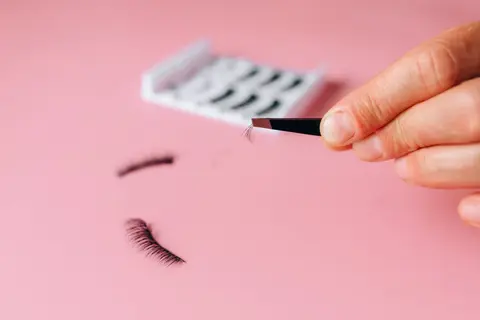
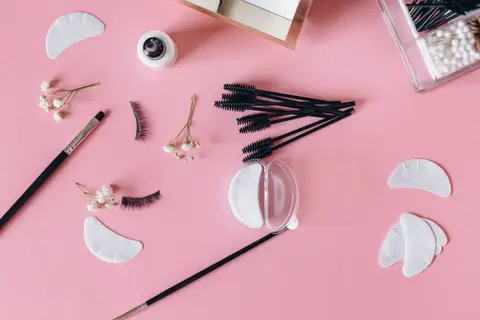
Start here if you're new to false eyelashes or want a general overview before narrowing down to a specific style. This hub covers the full range of false-lash categories and links out to focused guides for each one.
01
Editorial picks in False Eyelashes
General-purpose picks for shoppers who want a versatile option before choosing a more specific style.
As an Amazon Associate, OnlyEyelashes earns from qualifying purchases. Links open an Amazon search for the type of product described; we do not show prices or ratings. Details.
False lash formats at a glanceGeneral differences between the main at-home formats. Individual products vary.
Format
How it goes on
Best for
Watch out for
Strip lashes
One band placed along the whole lash line
First-timers and quick event looks
A stiff band can lift at the corners
Cluster lashes
Small sections placed one at a time
Custom density and placement
Needs patience and a steady hand
Magnetic lashes
Magnets (liner or sandwich pairs) instead of glue
Anyone who wants to skip lash glue
Magnets can be fiddly; check the maker's guidance
Types of false eyelashes
False eyelashes come in several formats. The main at-home types are strip lashes, cluster lashes, magnetic lashes and half lashes. They differ in how they go on, how much control you get and whether they need glue.
Types of false eyelashes comparedGeneral differences. Individual products vary.
Start with a natural style and a thin or clear band, trim it to fit, and practise once without glue. Our beginner guide and application guide cover the steps. Make sure you have a glue you can see going on, and a remover for the end of the day.
False lashes for your eye shape
Eye shape affects which style shows best. Hooded eyes often need lift at the outer corner (hooded eye guide), monolids benefit from curl (monolid guide), and mature eyes often suit lighter, shorter styles (mature eyes guide). Many people are a mix of shapes, so treat these as starting points.
Fibres and materials
Most false lashes use synthetic fibre. Labels like faux mink describe the feel, not the animal. We do not recommend real-mink lashes. See our fibre guide and our vegan guide.
Safety
Patch-test any new glue, bond, remover or liner on your inner arm 24 to 48 hours before first use, keep adhesive out of your eye, and stop if you notice stinging, redness or swelling that does not settle. For pain or a change in vision, see an eye doctor. This site is editorial and not medical advice.
Choose by the look you want
Start from the result, not the product. The same eye can wear a quiet everyday lash and a dramatic evening lash, and the difference is length, fullness and band colour more than the brand. Decide the occasion first, then use the table to narrow the style.
Look to lash choiceStyling conventions you can adjust.
Most people choose a type by how patient they are. Strips take a few minutes once you can trim and place them. Clusters take longer because you place many small pieces, but they let you decide where length goes. Magnetic sets avoid lash glue and rely on liner or paired magnets, which some find easier and others find fiddly.
Time, skill and adhesive by typeGeneral differences; individual products vary.
Soften with a remover and lift from the outer corner
Ignoring eye shape
Lashes disappear under a fold or look flat
Check your shape with the eye shape finder
Trusting a wear claim
Lashes lift sooner than the pack says
Treat wear and reuse figures as the maker's claim
What to buy with your lashes
Lashes alone are not enough. A glue or bond you can see going on, a remover made for it, a pair of tweezers or an applicator, and a small case are what make the second wear as good as the first. The glue and tools hub lists each, and the essential tools guide keeps the shopping list short.
Making a pair last
Peel old glue from the band after every wear, wipe it with a swab and a little remover, let it dry and store it flat in its tray. Retire a pair when the band stays bent or fibres fray. The lash care hub has the whole routine.
Fibres, bands and labels explained
Most false lashes are synthetic. Labels such as faux mink, silk or protein fibre usually describe how a synthetic fibre feels, not an animal source, so read the listing rather than the name. We do not recommend real-mink lashes, and our vegan and cruelty-free guide explains how to read the claims. Makers state vegan and cruelty-free status themselves, so check the maker's page for any certification it names.
Reading a lash listing
Listing says
Usually means
Check
Faux mink
A soft synthetic fibre
Whether the maker states it is vegan
Invisible or invisiband
A thin, flexible, often clear band
Band thickness in photos
3D or volume
Several layers of fibres
Weight and how full it looks at your length
Pre-permed curl
Fibres set with a curl
The curl name (C, D, DD)
Reusable
The maker says it can be worn again
Treat the number as a claim
Comfort at every age and eye type
There is no age rule for false lashes. Fine or sparse lashes often like soft, short, lightweight styles, while a thick band can feel stiff on a delicate lid. Our mature eyes guide, monolid guide and glasses guide go through the details, and the teen guide keeps it practical and parent-friendly.
Planning lashes for an occasion
If you are buying for a specific day, work backwards from it. Choose the style a week or two ahead, try it once at home so trimming and placement are familiar, and keep a spare glue and a remover in your bag. The table below gives a starting point, not a rule.
Occasion planner
Occasion
Style
Why
Plan
Work or school
Natural
Close to your own lashes
Clear band, thin line of glue
Wedding
Soft wispy
Comfortable for hours and photographs well
Trial at your makeup run-through; see the wedding guide
How to choose false lashes for hooded eyes: shape, length placement, band flexibility, and application tips to keep lashes from disappearing under the crease.
Best lashes for round eyes: styles that add length toward the outer corner, what to avoid, a lash map, and named picks read from the makers' own pages.
A practical, editorial guide to choosing false eyelashes: band type, material, length and curl, eye shape fit, and how to avoid common first-time mistakes.
Learn how to choose vegan cruelty-free false lashes, what to check in ingredients and materials, and how to wear them comfortably.
Updated 2026-08-17
Frequently asked questions
What type of false lashes are best?
There is no single best type. Strip lashes are quickest, clusters give the most control, and magnetic lashes skip lash glue. Choose by your skill, the look you want and your eye shape, then start with a natural style close to your own length. See our guide to choosing.
What is the easiest false eyelashes to apply?
Most beginners find clear-band strip lashes or a magnetic set with liner the simplest, because there is one piece to place. Clusters give more control but take longer. How to apply false eyelashes walks through each type.
Should an older woman wear false eyelashes?
There is no age rule. If your lashes are fine or sparse, a short, soft, wispy style can add density without looking heavy, while a thick black band may feel stiff. Our mature eyes guide has more.
Is it false lashes or fake lashes?
Both mean the same thing. "False lashes" or "false eyelashes" is the usual product term and "fake lashes" is the casual one. Shops and search results treat them alike, and this site uses false eyelashes.
What are the types of false eyelashes?
The main at-home types are strip, cluster, magnetic and half lashes.
What are the best false eyelashes?
The ones that suit your eye shape, skill and look. See our guide.
How do I choose false eyelashes?
Decide the look, check your eye shape, choose the type, pick a length near your own and buy the support products.
Are false lashes bad for your natural lashes?
Used and removed gently, they sit on or near the lash line. Pulling them off dry is what causes damage, so use a remover.