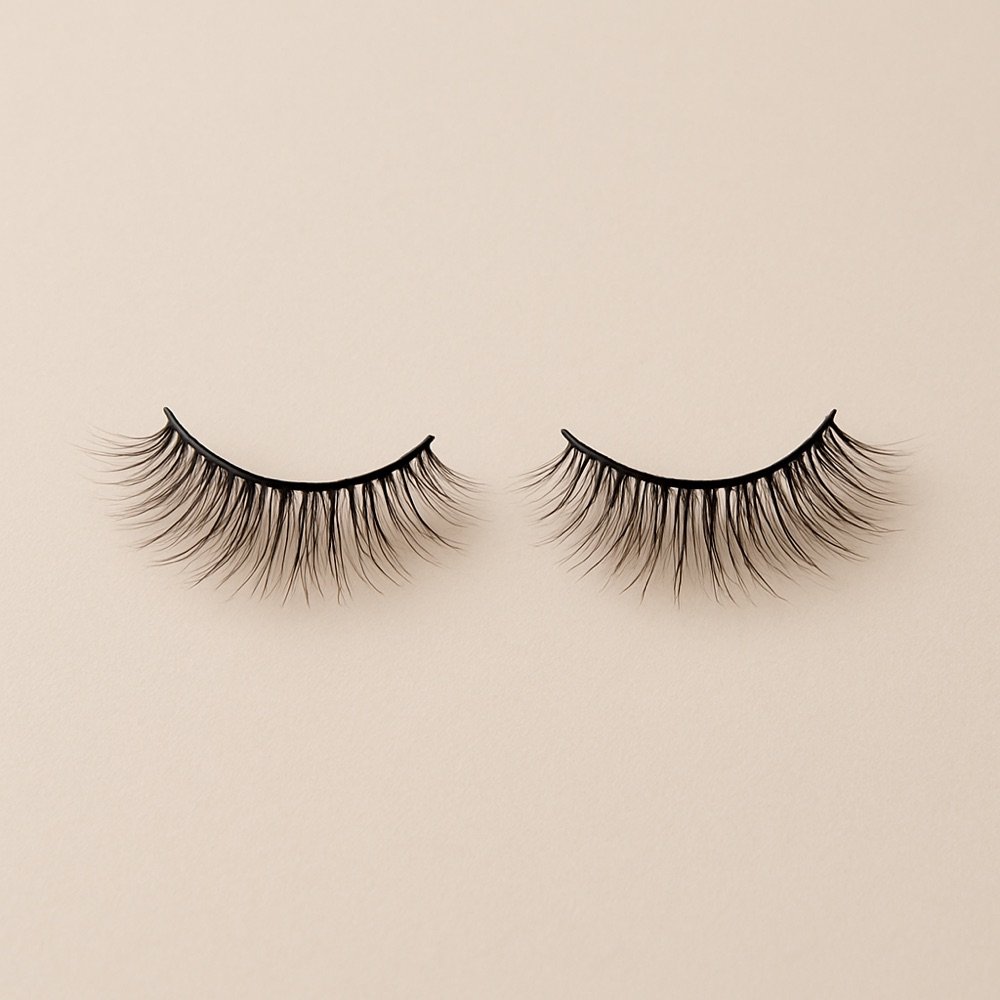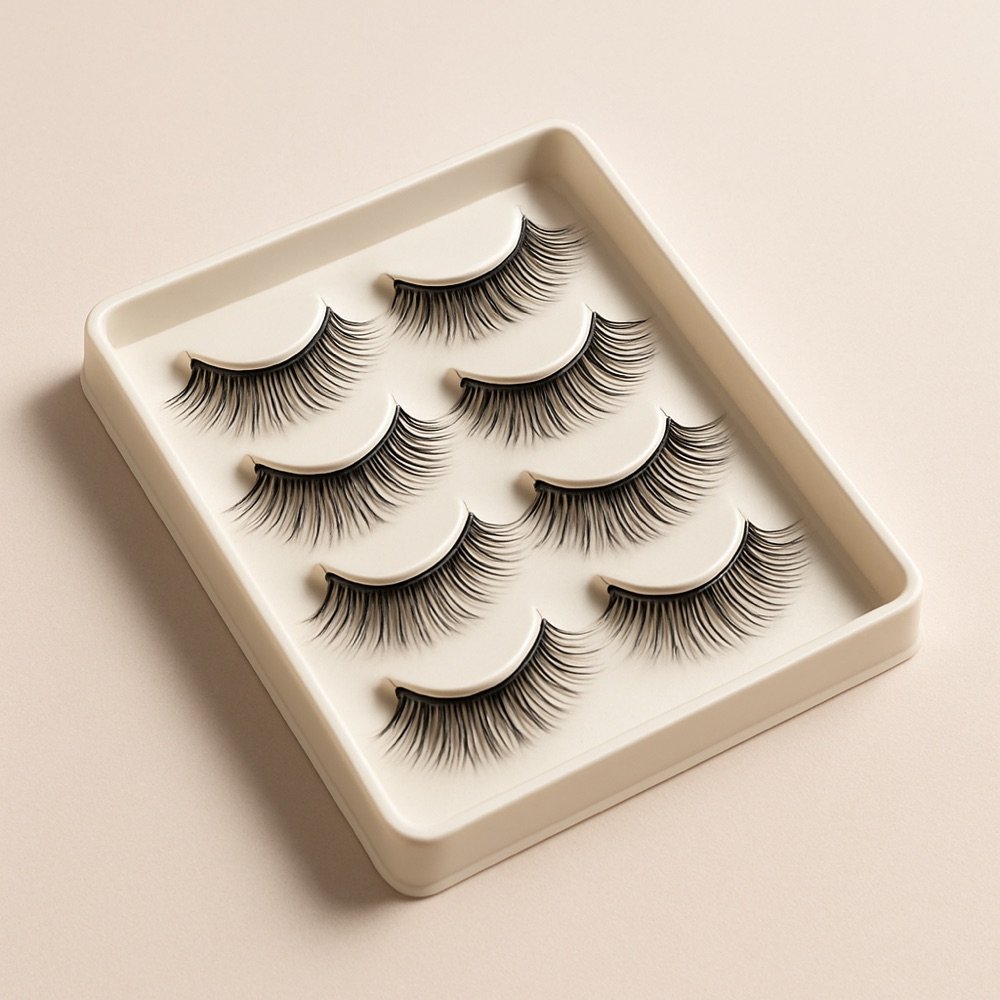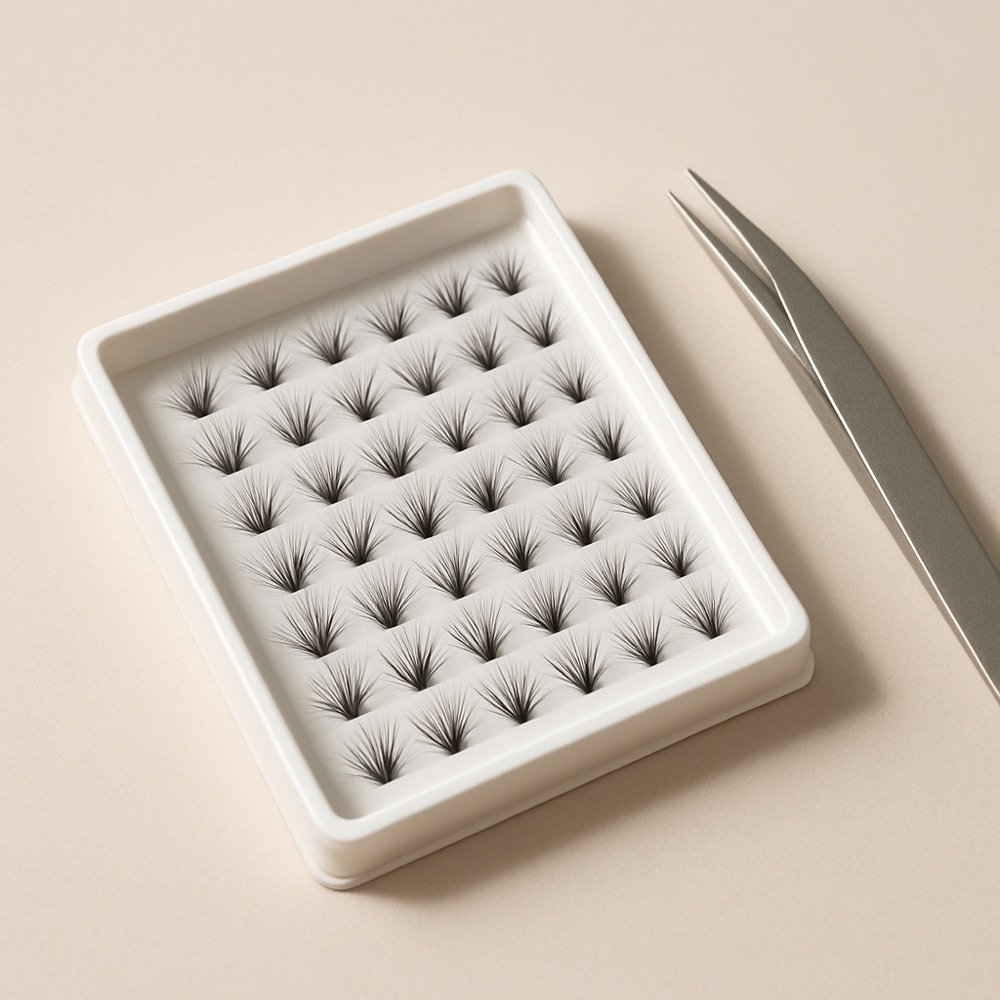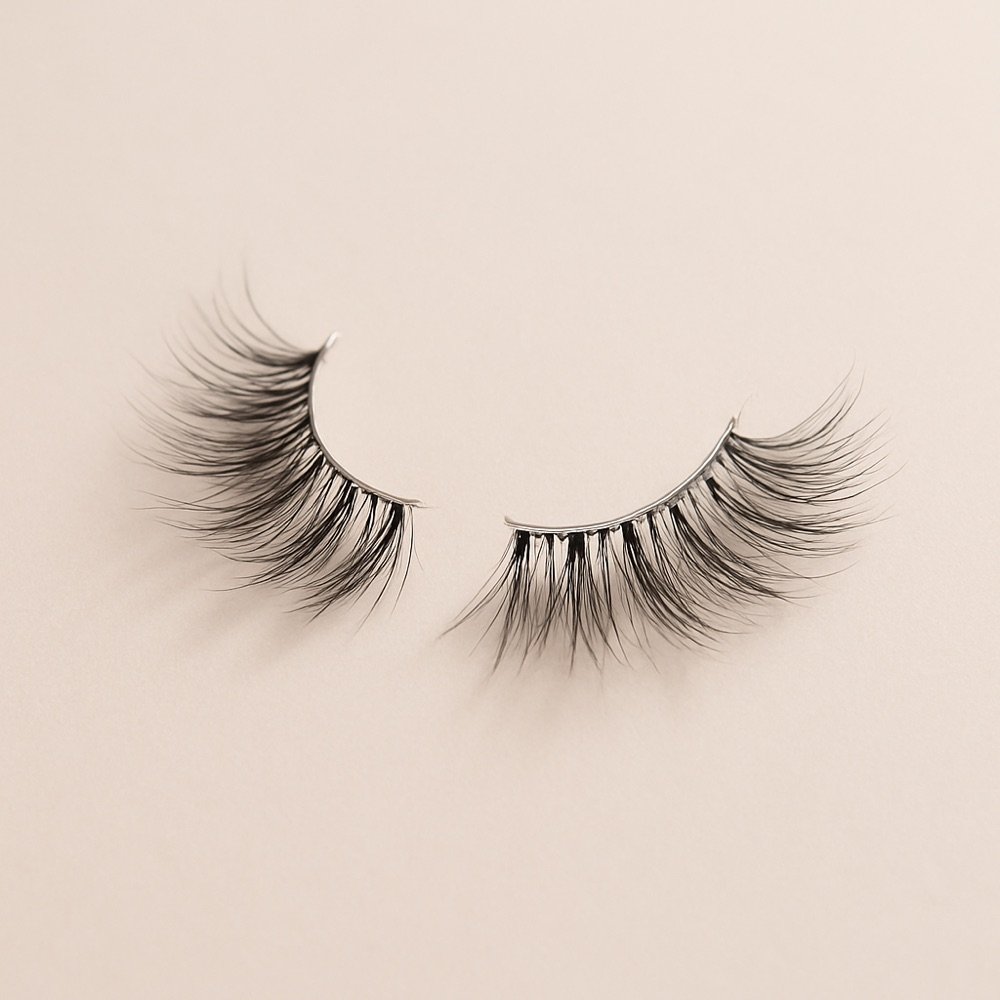
Choose by look
| Look | Style | Length | Band |
|---|---|---|---|
| Everyday | Natural | Close to your own | Clear or thin |
| Soft and fluttery | Wispy | Mixed | Clear or thin |
| Night out | Cat-eye or full | Longer at the outer corner | Black or clear |
| Big event | Dramatic | Longer, fuller | Black |
Try the lash styles gallery and the eye shape finder.
Strip, cluster or magnetic
| Type | Speed | Control | Glue |
|---|---|---|---|
| Strip | Fast | Medium | Yes |
| Cluster | Slower | High | Bond and seal |
| Magnetic | Fast | Medium | No lash glue |
See strip vs cluster.
Before you buy
- Check the band: clear or black, thin or thick.
- Check the fibre: synthetic, faux mink or other. We do not recommend real mink.
- Check the stated reuse figure, which is the maker's claim.
- Buy a glue and remover too: glue guide.
New to application? Read how to apply false eyelashes.
Matching lashes to your eye shape
Eye shape changes which style looks best. Hooded eyes often benefit from lift at the outer corner, round eyes from a balanced shape, and almond eyes work with most. These are styling conventions, not rules, and many people are a mix of shapes. Use the eye shape finder to see yours, then open the lash map for a length for each zone.
| Eye shape | Try | Why |
|---|---|---|
| Almond | Most styles | Balanced shape |
| Hooded | Wispy with outer lift | Shows under the fold |
| Round | Cat-eye taper | Elongates the shape |
| Monolid | Curled, mixed length | Stays visible |
Don't forget glue, tools and care
A good pair needs good support. A glue you can see going on, a remover and a case make the lashes easier to apply and last longer. See our glue guide and reuse guide.
| Format | How it goes on | Best for | Watch out for |
|---|---|---|---|
| Strip lashes | One band placed along the whole lash line | First-timers and quick event looks | A stiff band can lift at the corners |
| Cluster lashes | Small sections placed one at a time | Custom density and placement | Needs patience and a steady hand |
| Magnetic lashes | Magnets (liner or sandwich pairs) instead of glue | Anyone who wants to skip lash glue | Magnets can be fiddly; check the maker's guidance |
Fibres and bands: what the label means
Most false lashes are made of synthetic fibre. Labels such as faux mink or silk usually describe the feel of a synthetic fibre rather than a natural one, so read the listing. We do not recommend real-mink lashes; our fibre guide explains the labels. The band matters as much as the fibre: a thin, flexible band sits closer to the lash line and is easier to trim, while a thick band is more visible and more likely to lift at the corners.
Pick the fibre for the feel you want, then check the band, the length and the maker's care instructions. If you are comparing two pairs, put the band and length side by side before you look at anything else.
What each choice changes
Most buying decisions come down to four features on the listing. Knowing what each one does makes two similar-looking packs easy to tell apart.
| Feature | Choose this for | Watch out for |
|---|---|---|
| Thin clear band | Blending at the lash line with little liner | Can be fiddly to hold while you place it |
| Black band | A built-in liner effect | Shows if it sits above the lash line |
| Short to medium length | Everyday wear and glasses | Less drama in photos |
| Graduated length (shorter inside) | A lifted, open look | Needs careful placement at the outer corner |
| Multipack | Keeping spares or switching looks | Check every pair before use; a multipack can include uneven pairs |
| Pre-cut half lashes | No trimming, easy outer-corner lift | Do not cover the whole lash line |
A simple buying plan
- Pick the occasion. Everyday, an evening out or a big event decides length and fullness.
- Pick the type. Strip for speed, cluster for control, magnetic if you want to avoid lash glue.
- Check your eye shape. The eye shape finder takes a minute and points to styles that tend to suit.
- Choose a length near your own. One size up is plenty for a first pair.
- Add the support products. A glue you can see going on, a remover and a case.
If you want the lengths worked out zone by zone, open the lash map. Our how to choose false eyelashes guide goes deeper on every step.
Common buying mistakes and how to fix them
| Mistake | What happens | Fix |
|---|---|---|
| Buying the longest pair | Looks heavy and lifts at the corners | Go one size up from your own length, not three |
| Ignoring the band | A thick band shows and feels stiff | Check band colour and thickness on the listing first |
| Skipping the glue | A pack of lashes with nothing to hold them | Buy a strip glue or a cluster bond with the lashes |
| Trusting the wear claim | Lashes do not last as long as the pack says | Treat every wear and reuse figure as the maker's claim |
| Choosing real mink | Animal welfare questions | Choose synthetic or faux fibres; see the label section above |
| No patch test | Irritation near the eye | Patch-test new glue 24 to 48 hours before use |
When a pair goes wrong, it is rarely the lash itself. Most trouble comes from fit, glue or placement, which the application guide and trimming guide fix.
Who each type is for
- Strip lashes suit anyone who wants a quick result for an event or a day out. See the strip lashes hub.
- Cluster lashes suit people who like to customise and have the patience to place small pieces. See the cluster lashes hub.
- Magnetic lashes suit people who want to skip lash glue and are happy to use a magnetic liner or a paired set. See the magnetic lashes hub.
Safety first: patch-test, keep adhesive out of your eye, and stop if you feel stinging or see redness or swelling that does not settle. For pain or a change in vision, see an eye doctor.
A short glossary of lash listings
Listings use a lot of shorthand. This short glossary covers the terms you will see most often, so you can compare two packs without guessing.
| Term | Meaning |
|---|---|
| Band | The strip of material that holds the fibres |
| Invisiband | A brand name for a thin flexible band; many makers use similar names |
| Wispy | Fibres of mixed length that criss-cross |
| Demi | A shorter, half-width style |
| Half lash | A strip that covers only the outer half |
| Curl (C, D, DD) | How strongly the fibres curve; see the curl chart |
| Pair | One lash for each eye; a 4-pair pack holds four sets |
| Reusable | The maker says it can be worn again; treat the figure as a claim |
When two packs look alike, compare the band, the length in millimetres and the number of pairs before you compare anything else.