The core difference
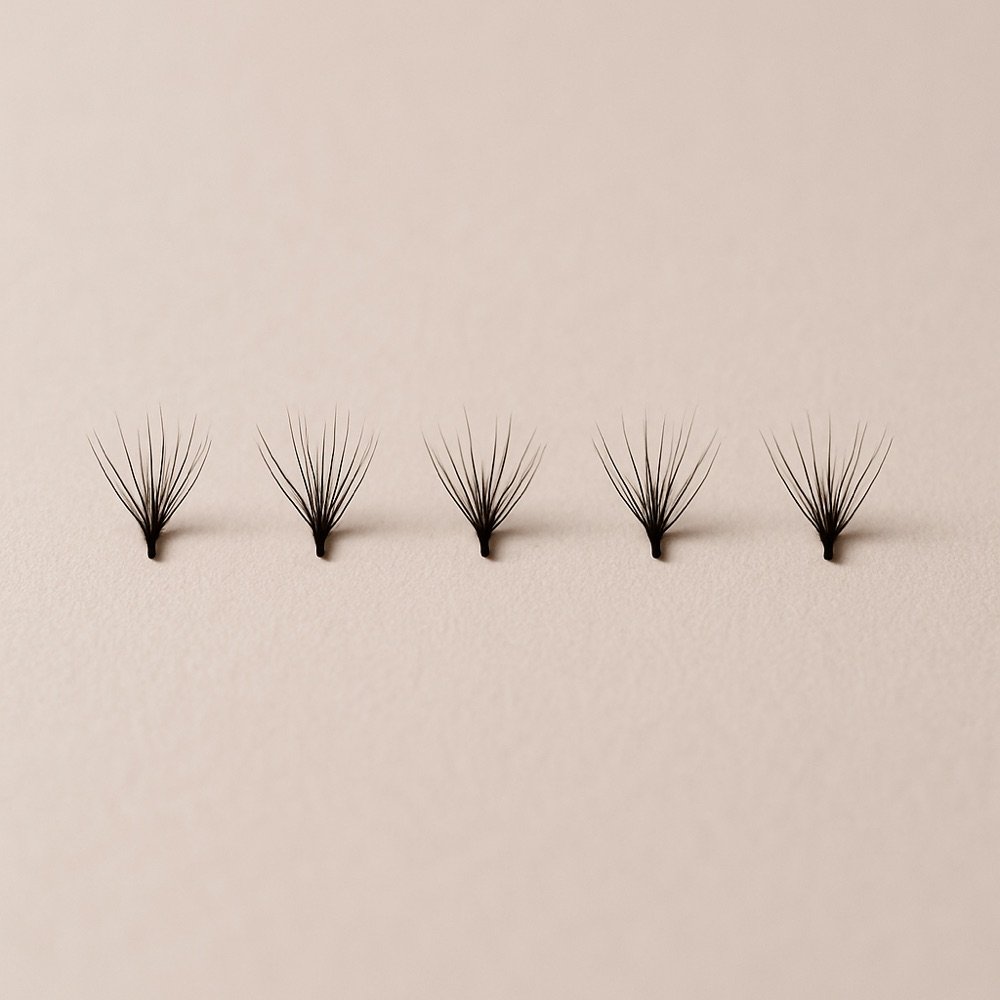
Strip lashes and cluster lashes both create the effect of thicker, longer natural lashes, but they get there in different ways. A strip lash is one continuous band, pre-shaped to roughly the width of an eye, that you apply in a single motion along the lash line. Cluster lashes -- sometimes called individual lashes -- are small groupings of a few fibers each, applied piece by piece to specific sections of the lash line.
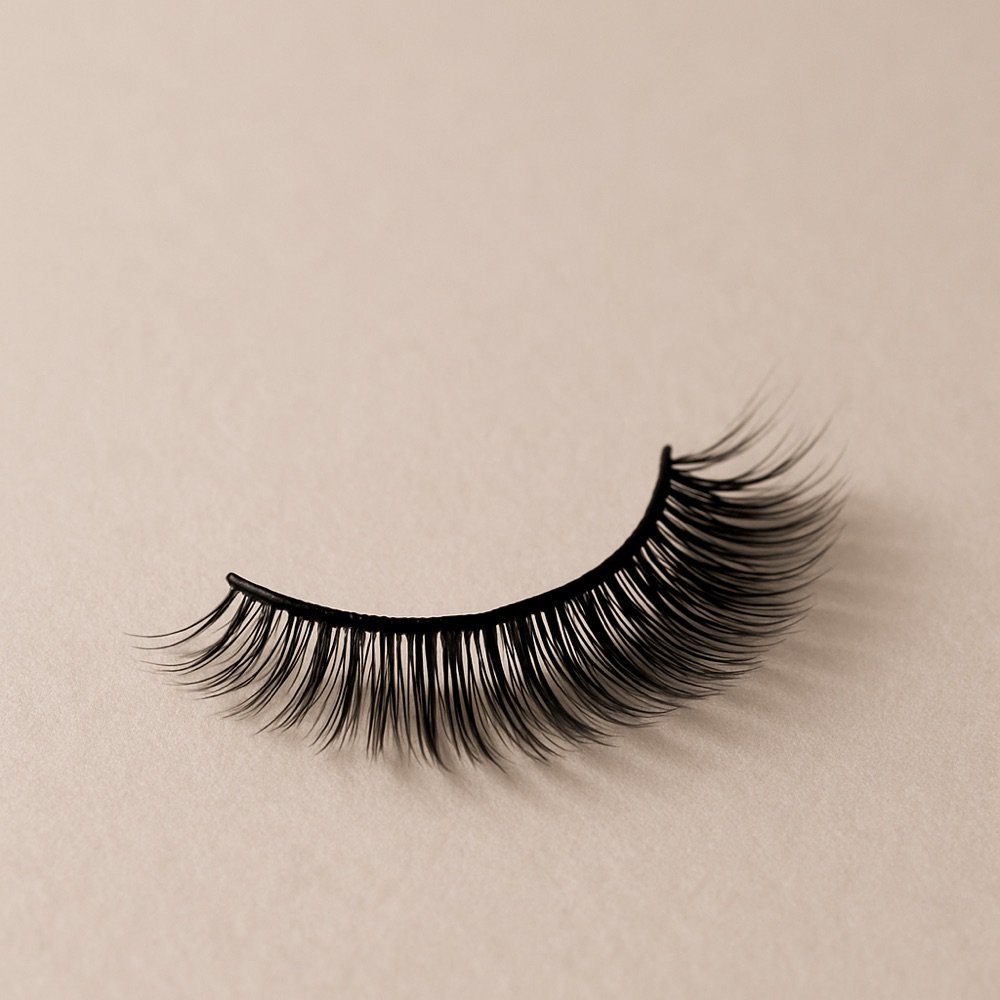
That structural difference cascades into nearly every other point of comparison: how long application takes, how customizable the final look is, and how the lashes feel once they're on.
Application time and difficulty
Strip lashes are generally faster to apply because there's only one placement decision: lining up a single band along the lash line. Once you're used to trimming a strip to fit (see our trimming guide), the whole process can take well under a minute per eye.
Cluster lashes take longer because each cluster is placed and pressed individually, often ten or more per eye depending on desired density. Our cluster lash application guide walks through the full process step by step. The upside of that extra time is more control over placement.
Customization and natural blending
Because each cluster is placed separately, cluster lashes let you vary density across the lash line -- more fibers at the outer corner for a subtle lift, fewer near the inner corner, or gaps filled in only where your natural lashes are sparser. This makes cluster lashes a popular choice for shoppers who want a look that blends closely with their own lash line rather than an obviously uniform band.
Strip lashes, by contrast, come in one fixed shape and density along their whole length. Many brands offer strips with graduated length (shorter at the inner corner, longer at the outer corner) to mimic some of that same customization, but you're choosing from a preset design rather than building your own.
Browse our recommended products
Our featured picks refresh periodically. While we update them, our editorial guides can help you find the right pick.
See our guidesComfort and all-day wear
Comfort varies by individual, but a few general patterns are worth knowing. Strip lash bands, especially stiffer ones, can sometimes feel noticeable at the inner or outer corners until the band softens slightly with body heat -- our guide on trimming and fitting strip lashes covers ways to reduce this. Cluster lashes, because they don't involve one continuous band, often feel lighter, since the adhesive only touches small sections rather than the full lash line.
Neither style is inherently more "damage-free" than the other, and we don't make unverified wear-time or comfort claims. If you experience persistent discomfort, irritation, or lash-line tenderness with either style, remove the lashes and consider whether the adhesive, band material, or application technique is the cause.
Removal and reuse
Strip lashes are typically easier to remove as a single piece, and many synthetic strip styles are designed to be reused multiple times if cleaned and stored properly -- see our cleaning and reuse guide. Cluster lashes can also be reused, but because they're smaller and applied individually, they're more prone to losing a few clusters during removal, which can leave uneven density on a second wear.
Cost and value over time
Per-pair pricing between strip and cluster lashes is often similar, but the real cost comparison depends on how many wears you get out of a single pack. A cluster pack typically contains many individual pieces, so losing a few clusters to breakage or difficult removal over time doesn't necessarily end the pack's usefulness -- you can often keep applying whatever clusters remain in good condition. A strip lash pair, by contrast, is generally an all-or-nothing proposition: once the band itself is damaged or badly warped, the whole pair typically needs replacing.
If you tend to lose or misplace small items, that's also worth factoring in -- clusters are easier to drop or lose track of during application than a single strip, simply because there are more individual pieces to manage in one sitting.
Can you mix both styles?
Yes, and it's a common approach among more experienced false-lash wearers. A frequent combination is applying a strip lash as the base layer for overall length and density, then adding a few individual clusters at the outer corner to build extra volume exactly where a cat-eye lift is wanted. This gives you the speed of a strip lash with some of the targeted customization of clusters, without needing to place ten or more individual clusters across the entire lash line.
If you try this combination, apply the strip lash first and let the adhesive fully set before adding clusters on top, so the added pieces don't shift the base strip out of place.
Browse our recommended products
Our featured picks refresh periodically. While we update them, our editorial guides can help you find the right pick.
See our guidesWhich should you choose?
As a general starting point: choose strip lashes if you want a faster routine and a consistent, predictable shape. Choose cluster lashes if you want to customize density across your lash line or prefer a lighter feel, and you're comfortable spending a few extra minutes on application. Many shoppers eventually keep both on hand for different occasions -- strips for a quick full look, clusters for subtle everyday wear or filling gaps.
If you're still unsure, consider how much time you realistically have on a typical morning versus a special occasion. A quick weekday routine usually favors strips; an evening where you have more time to spend on your look is a reasonable place to experiment with clusters for the first time.
Matching the format to the occasion
For everyday wear, most people settle on whichever format fits fastest into their existing routine, which is usually strips. For photographed events like weddings or parties, some wearers prefer clusters specifically because they can build extra density in areas that show up well on camera without committing to a single fixed strip shape. For costume or performance use, where a bold, uniform look matters more than customization, a dramatic strip lash is often the simpler choice. None of these are strict rules -- they're just common patterns worth considering as a starting point for your own decision.
Final recap
Strip lashes: faster, consistent shape, easiest for beginners. Cluster lashes: slower, more customizable density, often lighter feel. Neither is objectively better -- the right pick depends on how much time you want to spend on application and how much control you want over the finished density across your lash line.
Many wearers ultimately find they don't need to pick just one -- keeping both formats on hand covers a wider range of occasions than committing to a single style permanently.
Whichever you start with, our buying guide and format-specific application guides can help you get a comfortable, well-fitted result from either style.
As you gain experience with both formats, you'll likely find your own preference shifting depending on the day, the occasion, and how much time you have -- which is exactly why many long-time false-lash wearers keep both strips and clusters stocked rather than choosing permanently between them.
Whichever you choose today, treat it as the start of an ongoing preference rather than a one-time, permanent decision -- your ideal mix of speed, control, and comfort may well shift as you gain more experience with each format.
Bookmark this comparison and revisit it any time you're unsure which format fits a new occasion -- the underlying trade-offs covered here rarely change even as your own preferences evolve.