Why clean false lashes at all
Reusable strip and cluster lashes are designed to be worn more than once, but leftover adhesive, mascara residue, and natural oils build up along the band with each wear. Left uncleaned, this buildup can stiffen the band, dull the fibers, and make the next application harder because new glue won't adhere cleanly to old residue. A quick cleaning routine after each wear extends how many times a pair can reasonably be reused.
Beyond simply extending the life of a pair, cleaning also affects how comfortable and secure the next application feels. A band coated in old, half-dried adhesive doesn't sit flush against the lash line the way a clean band does, which can create small gaps or an uneven fit on the next wear even if the fibers themselves are still in good shape.
Removing old adhesive
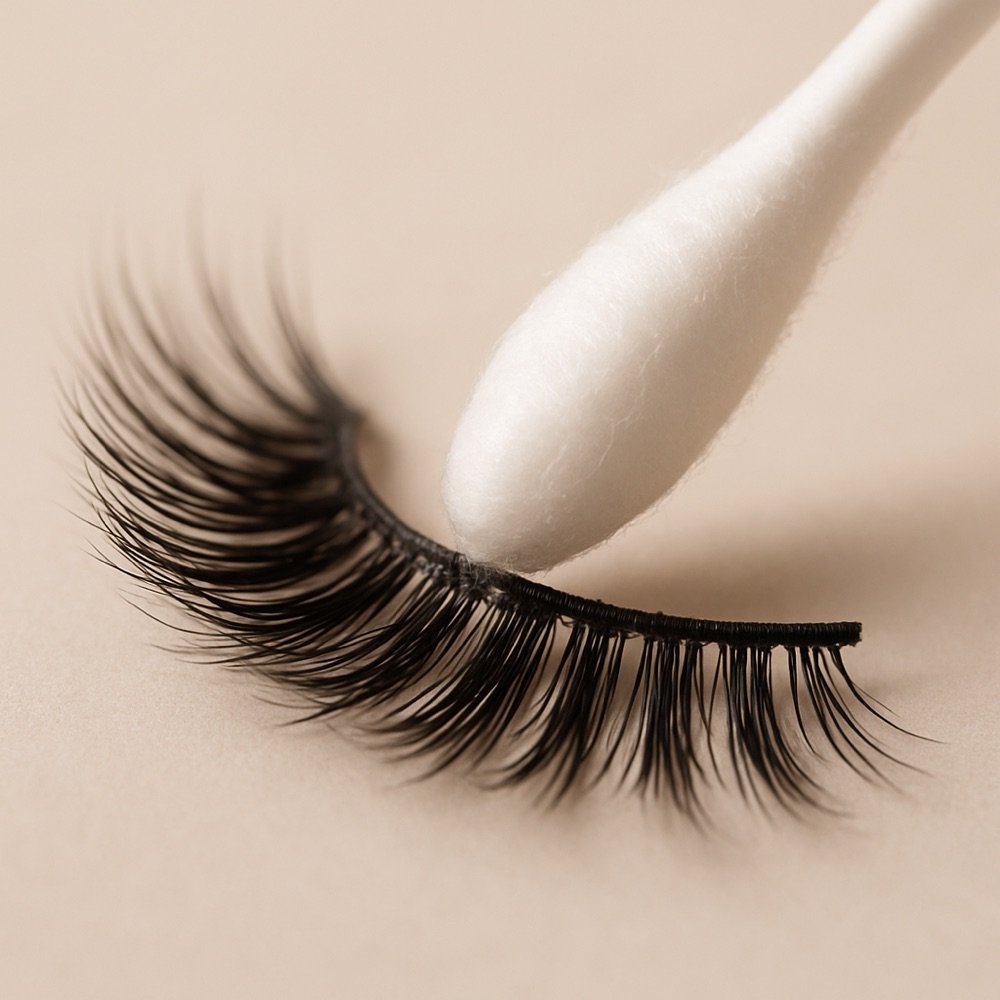
Start by gently peeling away any dried adhesive still clinging to the band, using clean tweezers or your fingertips. Avoid pulling at fibers directly. If adhesive is stubborn, a dedicated lash glue remover applied to a cotton swab and dabbed -- not rubbed -- along the band can loosen residue without soaking the fibers.
Cleaning the fibers
Once the band is free of major residue, a light cleaning pass helps remove mascara or makeup buildup on the fibers themselves:
- Dampen a cotton swab or soft brush with a small amount of gentle, oil-free micellar water or a diluted mild cleanser.
- Starting at the base and moving outward toward the tips, gently swipe along the fibers in the direction they naturally point.
- Avoid soaking the band itself, since excess moisture can loosen the glue bond holding fibers to the band.
- Wipe away any remaining residue with a dry cotton swab.
Drying and reshaping
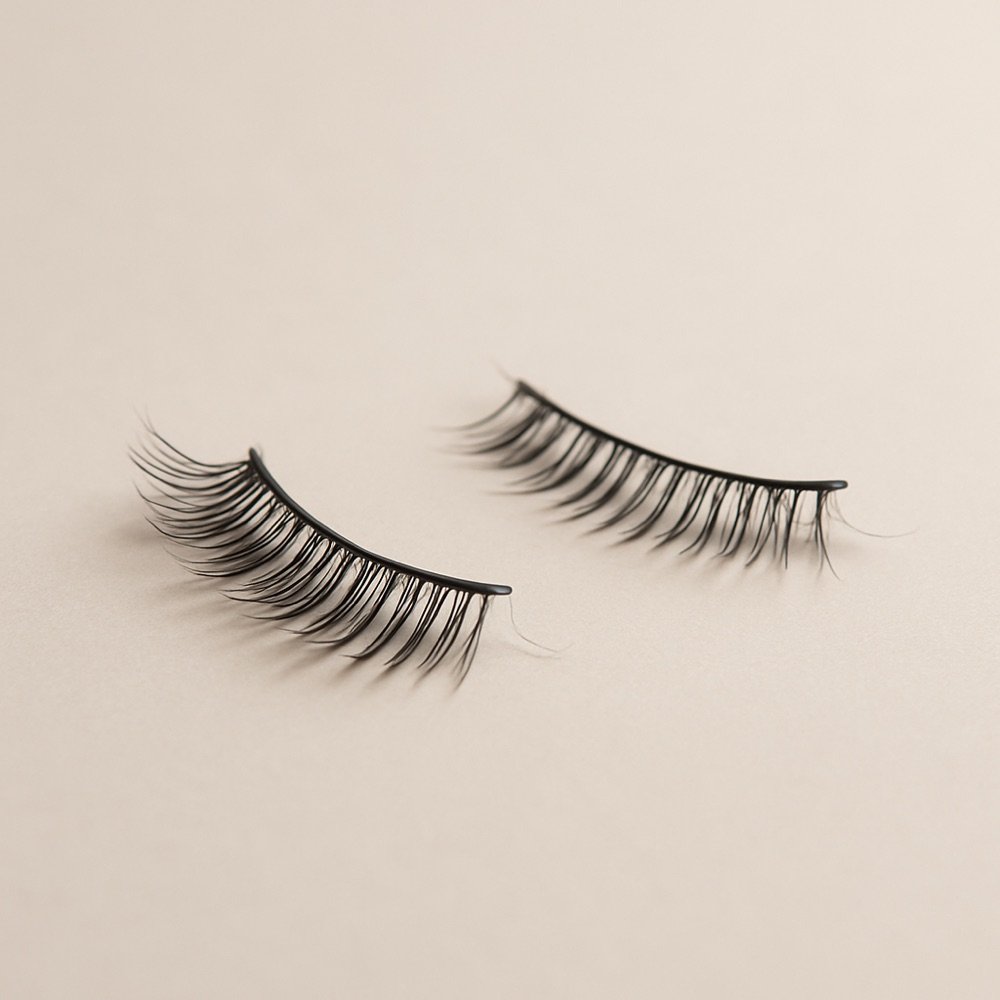
Let lashes air-dry completely on a clean, flat, lint-free surface before storing them -- packing away damp lashes can encourage the band to warp or the fibers to clump. If the curl has flattened slightly, gently reshaping the band around a clean, dry tool designed for this purpose can help restore some of the original curve, though results vary by fiber type.
Browse our recommended products
Our featured picks refresh periodically. While we update them, our editorial guides can help you find the right pick.
See our guidesStorage between wears
How you store lashes between wears matters as much as cleaning. A dedicated lash storage case with a rigid tray keeps the band from getting crushed or bent out of shape, which is a common reason reused lashes start looking different from their first wear. Avoid tossing lashes loose into a makeup bag, where they can get flattened by other items.
Cleaning clusters vs strips
The general cleaning process is similar for both formats, but clusters need a bit more care because there's less material holding each small piece together. When cleaning clusters, handle each one gently and avoid excessive bending at the base, where fibers meet the small band -- this is the most likely point of breakage. Strip lashes, having one continuous band, are generally more forgiving of a slightly firmer cleaning pass, though the same general principle of avoiding oversaturation applies to both.
Because clusters are more prone to occasional breakage during cleaning, it's normal to lose a few individual pieces over time even with careful handling. This doesn't necessarily mean the rest of the pack needs replacing -- just plan to supplement a partially depleted cluster pack with a fresh one before your remaining supply gets too sparse for even spacing.
Cleaning and storing lashes while traveling
Traveling adds a few extra considerations to lash care. If you plan to clean lashes on the road, packing pre-portioned cotton swabs and a small amount of glue remover avoids needing to bring full-size bottles. Let lashes fully air-dry before packing them into a travel case -- packing damp lashes in a closed case, especially in a suitcase that may sit for hours, is one of the more common ways a pair gets warped or clumped before a trip is even over.
A rigid, compact case matters even more while traveling than at home, since luggage handling involves far more compression and movement than a dresser drawer. If you're bringing multiple pairs, keeping each pair in its own labeled compartment (rather than loose together in one case) avoids fibers from different pairs tangling with each other.
When to retire a pair
Even with careful cleaning, false lashes don't last indefinitely. Signs it's time to retire a pair include a band that no longer holds its curved shape, fibers that look sparse or clumped despite cleaning, or a band that's become brittle or cracked. Continuing to wear a pair in that condition can make application harder and the finished look less even. We don't publish specific wear-count claims, since durability varies by product and care routine -- treat these signs, not a fixed number, as your guide.
Browse our recommended products
Our featured picks refresh periodically. While we update them, our editorial guides can help you find the right pick.
See our guidesHow often should you clean false lashes?
As a general practice, clean false lashes after every wear rather than waiting until residue has visibly built up. Adhesive is far easier to remove while it's only been on the band a short time; letting several wears pass before cleaning gives residue more time to harden and bond more firmly to the fibers, making the eventual cleaning session more difficult and more likely to stress the band.
Tools worth having on hand
A short list of supplies covers most lash-cleaning needs: fine-tip tweezers for peeling away dried adhesive, cotton swabs for targeted cleaning, a gentle oil-free cleanser or micellar water, and a clean, flat surface or dedicated case for drying and storage. None of these need to be lash-specific products you don't already own, with the possible exception of a dedicated glue remover if regular cleanser isn't cutting through stubborn adhesive residue -- see our lash glue guide for remover options.
Signs your care routine is working
A well-maintained pair of reusable lashes should look and feel roughly consistent across several wears: the band stays flexible rather than growing stiff, fibers keep their original curl instead of flattening out, and new adhesive adheres cleanly on each application rather than fighting against old residue. If you notice each of these staying stable wear after wear, your cleaning and storage routine is doing its job. If any of them starts declining noticeably, revisit the cleaning and drying steps above before assuming the product itself is simply low quality.
A note on cleaning magnetic lashes
Magnetic lashes generally skip the adhesive-removal steps above, but the fiber-cleaning and drying steps still apply. Pay particular attention to keeping makeup residue off the magnetic segments themselves, since a buildup there can weaken magnetic hold over time even if the fibers look clean. See our magnetic lashes guide for more on this format specifically.
Whichever format you wear, the underlying principle of this guide holds across all of them: clean promptly, dry fully before storing, and store in a way that protects the band's shape. Following those three steps consistently is the biggest single factor in how many times a pair of false lashes can realistically be worn again.
Pair this routine with the buying guidance in our false-lash buying guide and you'll get more consistent, longer-lasting results from whichever style you choose, rather than treating each new pair as disposable by default.
A few extra minutes of care after each wear is a small trade for getting noticeably more use out of every pair you own, and it's a habit that pays off more the more often you wear false lashes.