Start with your goal, not the packaging
Walk down any beauty aisle, or scroll any Amazon results page, and you'll find dozens of false eyelash styles that all promise a dramatic transformation. The packaging rarely tells you what actually matters: whether a style fits your eye shape, how long it takes to apply, and whether it will look natural or noticeably "false" once it's on.
Before comparing brands, it helps to answer one question: what look are you going for? A soft, everyday lift calls for a different product than a bold evening look or a costume effect. Most buying mistakes happen when shoppers pick a lash style based on a product photo alone, without considering how the band, material, and shape will interact with their own eyes.
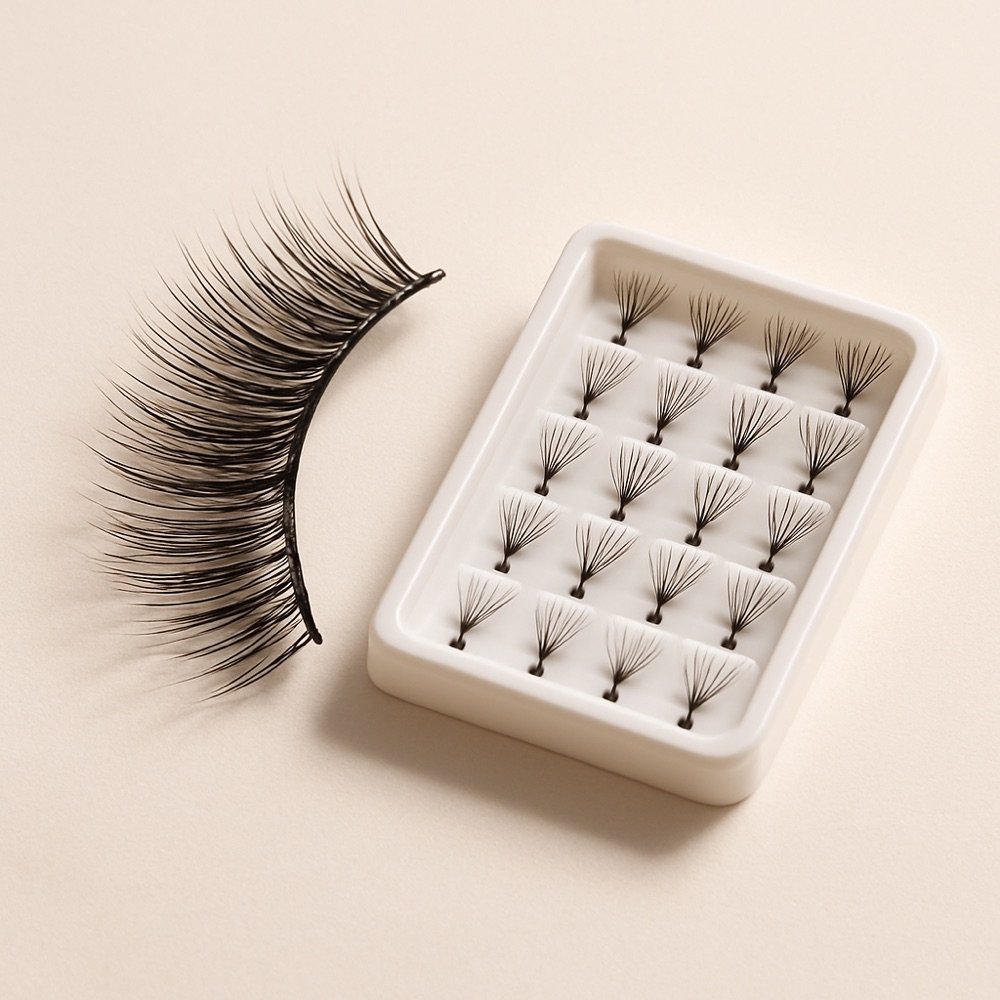
Band type: strip, cluster, or magnetic
The single biggest decision in choosing false eyelashes is band type, because it determines how the lashes attach and how much control you have over placement.
- Strip lashes come as one continuous band sized to the width of your eye. They're the fastest option once you're comfortable with the process, since one strip covers the whole lash line in a single motion. See our strip lashes hub for style breakdowns.
- Cluster lashes (sometimes called individual lashes) are small groupings of fibers applied to sections of your lash line. They allow more customization -- more density at the outer corner, less at the inner corner -- but take longer to place. Our cluster lashes hub covers this in more depth.
- Magnetic lashes use small magnets, either built into the lash band itself or paired with a magnetic eyeliner, to avoid traditional lash glue entirely. They can be easier to reposition but behave differently around water and humidity. Details are in our magnetic lashes hub.
If you're brand new to false lashes, strip lashes with a flexible clear or thin black band are generally the most forgiving starting point, since a single strip is easier to align than several small clusters.
Material: synthetic, faux-mink, or natural fiber
Most false eyelashes sold today are made from one of a few fiber types:
- Synthetic fibers (often PBT or similar plastic filaments) hold curl well and tend to be the most affordable and widely available option.
- Faux-mink is a synthetic fiber engineered to mimic a softer, finer texture. It is not made from animal fur -- "faux" specifically signals a synthetic substitute -- and is generally considered a cruelty-free alternative.
- Natural fiber lashes, including any lash marketed as genuine mink or other animal-derived material, involve animal-sourced fibers. Shoppers who want a cruelty-free product should look specifically for "faux," "vegan," or "synthetic" labeling rather than assuming.
We don't make claims about which material "looks more real" in general, since that depends heavily on the specific lash design, not just the fiber type. What we can say from a buying standpoint: synthetic and faux-mink options are widely available, tend to hold their shape across multiple wears, and are the more budget-friendly starting point for most first-time buyers.
Length, volume, and curl
Beyond band and material, three more variables shape how a lash style looks once worn:
- Length is usually described as short, medium, or long, sometimes with a graduated length across the band (shorter at the inner corner, longer toward the outer corner).
- Volume refers to how many fibers are packed into the band or cluster. Higher volume looks are fuller and more dramatic; lower volume looks tend to blend more naturally with existing lashes.
- Curl describes the shape of the fiber -- straighter curls tend to look more natural, while a more pronounced curl creates a wide-eyed, doll-like effect.
If your goal is a natural-looking result, our dedicated guide to natural-looking false lashes goes further into which combinations of length, volume, and curl tend to blend most easily with natural lashes.
Matching lashes to your eye shape
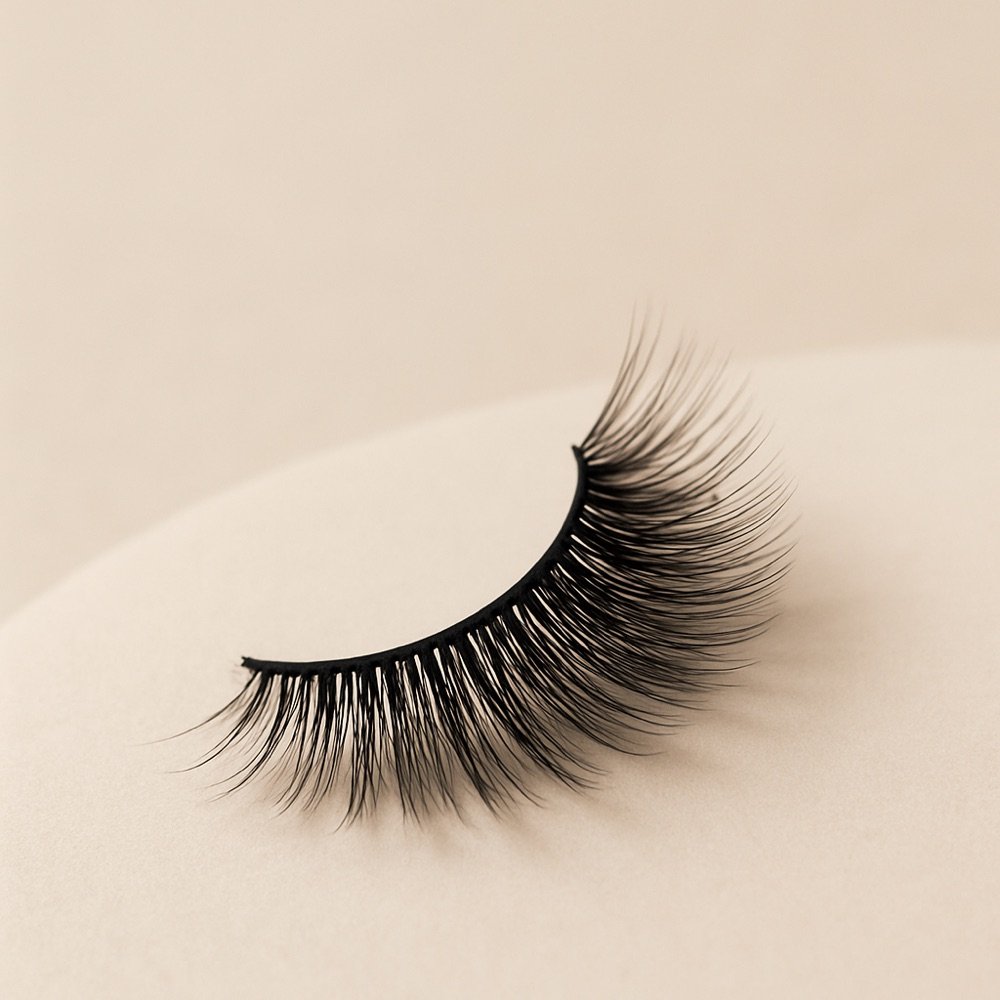
Eye shape changes how a given lash style sits and reads visually. A few general patterns worth knowing before you buy:
- Hooded eyes often benefit from lashes with more length toward the center and outer corner, since a lash band that's tallest at the center can get visually hidden under the brow bone crease. Our hooded eyes guide covers this in detail.
- Downturned or round eyes often pair well with a cat-eye style, where length builds toward the outer corner to create a lifting effect.
- Close-set eyes can sometimes benefit from lashes that are lighter near the inner corner, drawing visual attention outward instead.
- Wide-set eyes can sometimes benefit from the opposite approach -- slightly more density near the inner corner to visually pull the eyes closer together.
- Monolid and almond eyes generally have more flexibility with band shape, since there's less of a crease fold to work around, though a shorter overall length can still look more proportional on smaller lids.
These are general starting points, not rules -- eye shape guidance is meant to narrow your search, not dictate a single "correct" choice. Personal preference and comfort should always take priority. It's also worth remembering that most people's two eyes are not perfectly symmetrical, so a lash style that suits one eye may need a slightly different trim or placement on the other. Buying one style and adjusting fit through trimming, rather than assuming a single design will work identically on both sides, tends to produce a more comfortable and even result.
Browse our recommended products
Our featured picks refresh periodically. While we update them, our editorial guides can help you find the right pick.
See our guidesBudget vs luxury false lashes
Price differences between lash products typically come down to fiber quality, band flexibility, and how many times a pair is designed to be reused, rather than any dramatic difference in the core technology. We go deeper on this trade-off in our guides section, including a dedicated comparison of budget and premium options as our editorial calendar expands.
As a general buying principle: if you plan to wear false lashes occasionally, a more affordable multi-pack style is a reasonable place to start. If you expect to reuse the same pair regularly, a sturdier band and higher-quality fiber tend to hold up better across repeated wears -- see our guide on how to clean and reuse false lashes for care steps that extend the life of any pair.
It's worth resisting the assumption that a higher price automatically means a better fit for your eyes specifically. A premium lash with a stiff band can still feel less comfortable on a particular eye shape than a more affordable option with a softer, thinner band. When comparing listings at different price points, look past the price tag itself to the same core details covered in this guide -- band flexibility, fiber type, and length or volume -- since those are what actually determine fit and comfort, not the price alone.
If you have sensitive eyes
False lashes and lash adhesives sit close to the eye, so it's worth choosing carefully if you have a history of sensitivity. Look for adhesives labeled latex-free if you have a known latex sensitivity, and consider patch-testing a small amount of new adhesive on your inner forearm before applying it near your eyes.
If you ever experience redness, itching, swelling, discharge, pain, or any change in vision while or after wearing false lashes or lash adhesive, stop use immediately and consult an eye care professional or physician. This article is general consumer education, not medical advice, and it is not a substitute for professional care.
What to expect from your first application
Whatever style you choose first, it's worth setting realistic expectations for your first attempt. Application speed improves quickly with repetition, but the very first try -- with any band type, any adhesive, any tool -- usually takes longer than the packaging or a quick video might suggest. Give yourself extra time rather than trying a brand-new product for the first time immediately before an event.
It's also normal for the first pair you try not to be the pair you settle on long-term. Band shape, comfort, and how a style looks on your specific eyes are easier to judge after wearing a lash once than from a listing photo alone. Treat your first purchase as useful information rather than a final decision, and don't hesitate to try a different band type or length if the first one doesn't feel right.
How we choose what to recommend
OnlyEyelashes does not conduct in-house product testing, and we don't publish star ratings or claim hands-on wear results. Instead, our recommendations are based on disclosed editorial criteria: band design and flexibility, fiber type transparency, price relative to comparable listings, and how clearly a listing describes what's actually included. When we link to a product, it's because it fits the specific buying criteria described in that article -- not because of a paid placement.