What makes lashes look natural
A "natural-looking" false lash isn't about a specific brand or price point -- it's a combination of choices working together: length that matches your own lash length reasonably closely, a curl that isn't dramatically more curved than your natural lash curl, a band that disappears into your lash line, and placement that sits close to the root rather than floating above it. Get most of these right and even a fuller lash can still read as believable rather than obviously false.
Choosing length and curl
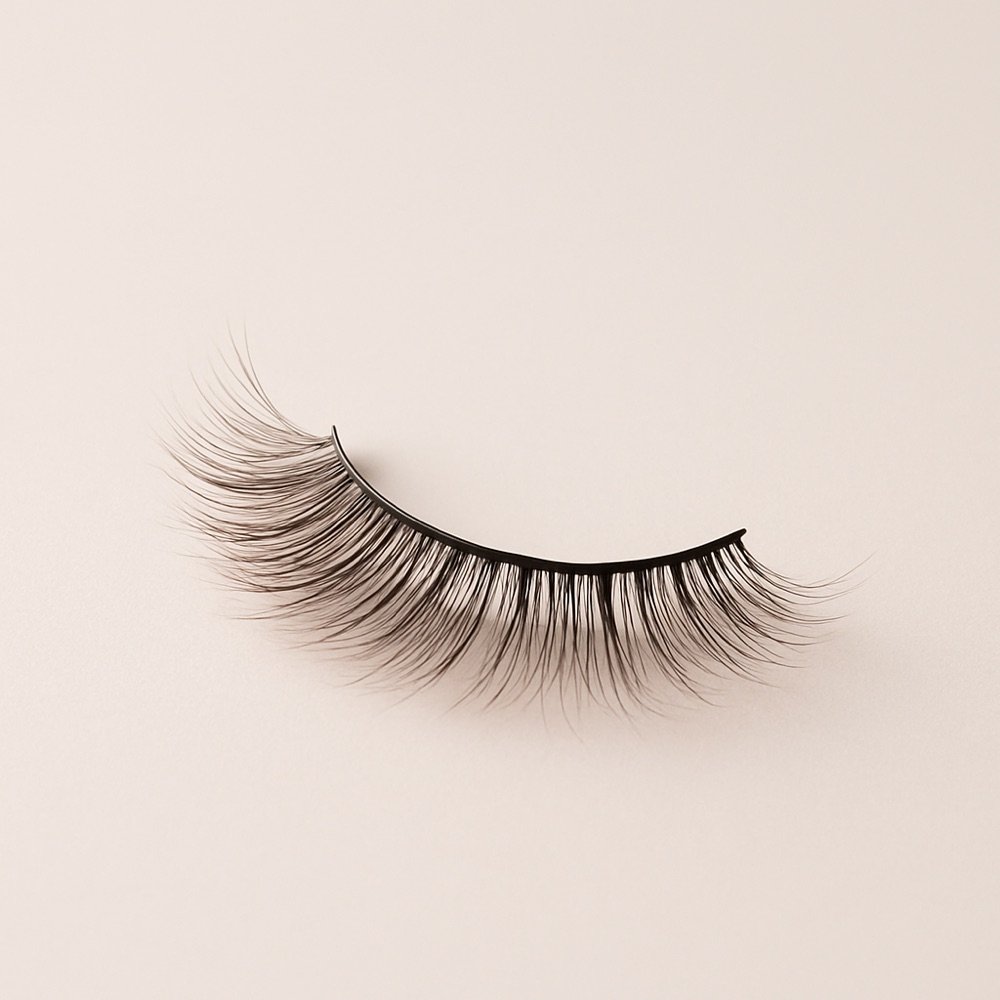
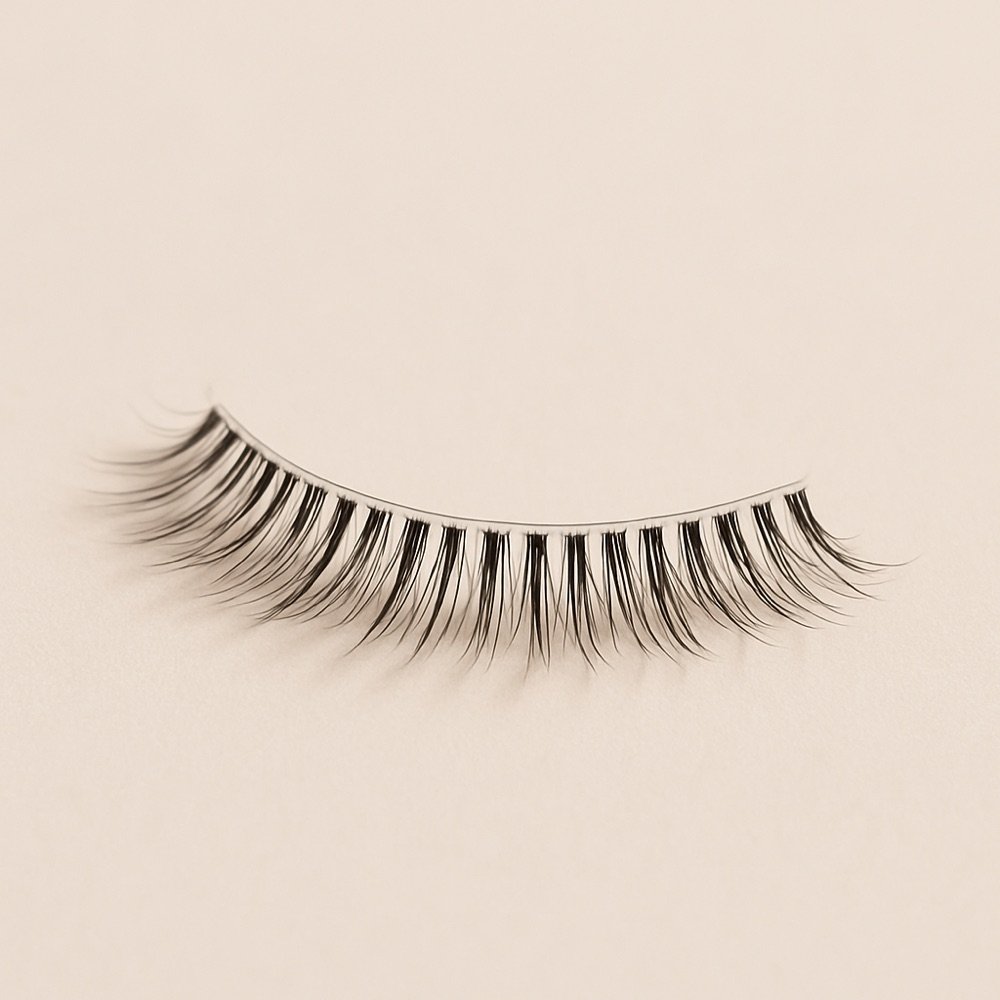
Extremely long or dramatically curled lashes tend to read as an obvious style choice rather than a natural enhancement, which is fine if that's the goal but works against a natural look. For a believable result, look for lashes described as short-to-medium length with a graduated shape -- shorter near the inner corner, gradually longer toward the outer corner -- rather than uniform length across the whole band. A gentler curl, closer to a natural lash curve, also tends to blend more convincingly than an exaggerated curl.
Band choice matters more than you'd think
A thick, stiff band is one of the fastest ways to give away a false lash, since it can create a visible dark line even when the fibers themselves look convincing. Clear, thin, and flexible bands are generally easier to disguise, especially paired with a thin layer of eyeliner along the lash line to visually merge the band with your own lash roots. See our guide on lash glue options if you're also deciding between clear and black adhesive, which affects this same blending goal.
Placement technique for a believable result
Even the most natural-looking lash style can look obviously false if it's placed too far above the natural lash root, creating a visible gap. Take your time aligning the band as close to the root as comfortably possible, working in short sections if needed rather than trying to place a full strip in one motion. Our cluster application guide and general lash guides both emphasize this same root-adjacent placement principle.
Browse our recommended products
Our featured picks refresh periodically. While we update them, our editorial guides can help you find the right pick.
See our guidesStyling around your natural lashes
A light coat of mascara over both natural and false lashes together can help visually merge the two, reducing any subtle difference in color or sheen between synthetic fibers and natural lashes. Curling your natural lashes before application (not after, since curling after can dislodge the falses) also helps the two blend into a single continuous curve rather than looking like two separate layers.
Common tells that give away false lashes
- A visible gap between the band and the natural lash root.
- A thick or dark band showing through, especially in bright or direct lighting.
- Uniform length and curl that doesn't taper toward the inner corner.
- Obvious clumping from too much mascara or adhesive.
None of these are permanent flaws in a product -- they're mostly about length/curl selection and application care, both of which are within your control regardless of which specific lashes you choose.
How lighting and photos change the effect
A lash set that looks natural in person can sometimes look more obviously false in photos, particularly under direct flash or strong overhead lighting, which can catch the edge of a band or make fibers appear shinier than they do in everyday indoor light. If you're preparing for photographed events, it's worth checking your chosen lash style under the kind of lighting you'll actually be photographed in beforehand, rather than assuming an in-person natural look will translate identically to camera.
Conversely, some styles designed to look dramatic and full in flash photography can look slightly heavier than expected under soft, natural daylight. Matching your lash choice to how and where you'll actually be seen -- daylight, indoor lighting, or flash photography -- is a small planning step that pays off more than most people expect.
Getting a natural look with clusters specifically
Cluster lashes have a particular advantage for a natural result: you can deliberately leave gaps or use shorter clusters in areas where your natural lashes are already fuller, reserving false clusters for genuinely sparse sections. This selective approach tends to look more convincing than uniformly covering the entire lash line, since it mimics how natural lash density actually varies across a real lash line rather than presenting one uniform band. See our cluster application guide for the placement techniques that make this approach practical.
Browse our recommended products
Our featured picks refresh periodically. While we update them, our editorial guides can help you find the right pick.
See our guidesChoosing lash color for a natural result
Most false lashes are sold in black, but brown and other softer shades are worth considering if your natural lashes and hair are lighter in tone. A jet-black lash against naturally light brown lashes can create a visible contrast that reads as more obviously false than the same style would in a brown or dark-brown shade closer to your natural coloring. This is a simple, often overlooked adjustment for shoppers specifically focused on blending rather than drama.
Everyday natural vs occasion natural
"Natural-looking" doesn't mean identical across every context. An everyday natural look generally calls for shorter length, lighter volume, and a close-to-invisible band, since the goal is enhancement that most people wouldn't clock as false lashes at all. An occasion-appropriate "natural" look has a bit more room for fuller volume or slightly more length, since evening lighting and makeup are already more done-up -- the goal there is closer to "enhanced but still believable" rather than "undetectable." Deciding which of these two goals you're going for before shopping helps narrow the length and volume choices covered earlier in this guide.
Natural-looking lashes if you wear glasses
Glasses lenses can visually compress or magnify the eye area depending on prescription strength, which changes how a given lash length reads once you put your glasses back on. If you typically apply lashes without glasses on, take a moment to check the result with your glasses on before finalizing your look, since a subtle, natural result without lenses can occasionally look slightly different once lenses are in front of the eye. This is especially worth checking for strong prescriptions, where lens magnification or minification effects are more noticeable.
Final thoughts
A natural-looking result comes from the combination of choices covered in this guide -- length, curl, band, placement, and color -- working together, rather than any single "natural" product category. Once you understand which of these factors matters most for your own eyes, you can apply the same reasoning to almost any lash style you're considering, rather than relying on marketing language alone.
The most reliable way to refine your own natural-look formula is simply to try a few variations and note what blends best for your specific eyes, lighting, and preferred finish -- general guidance can narrow the search, but personal observation will always be the final word.
For more on the fundamentals covered throughout this guide, see our broader false-lash buying guide, which applies to dramatic looks just as much as natural ones.
And if you're weighing whether to start with strips or clusters to achieve this kind of result, our strip vs cluster comparison can help you decide which format gives you the easiest path to the specific blend of length, density, and placement covered here.
A natural result is achievable with either strips or clusters, budget or premium fiber, once you understand which specific variables in this guide matter most for your own eyes -- that understanding will serve you far longer than any single product recommendation.
Revisit this guide any time you're shopping for a new occasion, since the right balance of length, curl, and band choice can shift depending on the specific look you're going for that day.