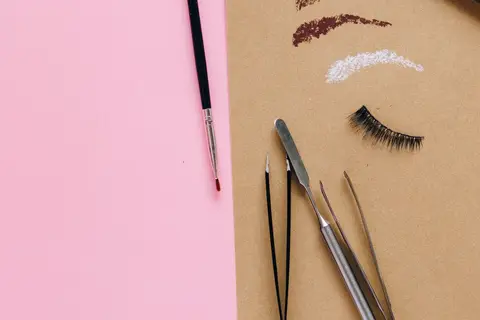
The right adhesive and a couple of basic tools make false-lash application faster and more comfortable. This hub covers glue types, applicators, trimming scissors, and removers.
01
Editorial picks in Glue & Tools
Adhesives and tools chosen for ingredient transparency and beginner control.
As an Amazon Associate, OnlyEyelashes earns from qualifying purchases. Links open an Amazon search for the type of product described; we do not show prices or ratings. Details.
Lash glue types comparedTypical differences between adhesive types. Always read the maker's label and ingredient list.
Type
Dries
Often chosen for
Check first
Clear
Clear
Light, natural looks
Hard to see while applying
Black
Black
Blending with dark liner
Can show if it spills past the band
Latex-free
Clear or black
Anyone avoiding latex
The ingredient list, not just the claim
Brush-on or tube
Same as the type above
Control over how much you use
A thin line works better than a thick one
Lash glue types
Lash glue, also called lash adhesive, is the one product that decides whether a set stays put and comes off cleanly. The main choices are the colour it dries, whether it is a single glue or a bond and seal, and what it is free from.
Lash glue types comparedTypical differences. Always read the maker's label and ingredient list.
Latex-free means the maker says the glue does not contain latex. It is not the same as "safe for sensitive eyes", and we do not describe any product that way. Read the full ingredient list, patch-test, and stop if anything stings. See the latex-free glue guide.
Patch-test any new glue, bond, remover or liner on your inner arm 24 to 48 hours before first use, keep adhesive out of your eye, and stop if you notice stinging, redness or swelling that does not settle. For pain or a change in vision, see an eye doctor. This site is editorial and not medical advice.
Cluster lashes usually use a two-step system: a bond that holds each piece, and a seal over the join. Use one made for clusters, not a strip glue. Read about wear time in how long cluster lashes last.
Storing glue
Keep the cap tight, store upright in a cool dry place, and replace glue that thickens or changes colour. Our glue guide has the details.
Match the glue to the lash
The most common reason lashes fall off is the wrong adhesive. Strip lashes, clusters and magnetic lashes each need something different, and a glue made for one is not a good substitute for another.
Which adhesive for which lashGeneral guidance; read each maker's directions.
Lash type
Adhesive
Applied
Removed with
Strip lashes
Strip lash glue, clear or black
Thin line, wait until tacky
Lash remover and a swab
Cluster lashes
Bond and seal
Dot of bond, seal over the top
A remover made for the bond
Half lashes
Strip lash glue
Thin line, wait until tacky
Lash remover
Magnetic lashes
Magnetic liner or paired magnets
Thin line of liner
Gentle makeup remover
Salon extensions
Professional adhesive
By a technician
By a technician
We list named strip glues, a black glue and a cluster bond system with the makers' own details in the lash glue buying guide.
Clear or black?
Clear glue dries clear and suits natural looks. Black glue reads as liner at the lash line and hides small spills. Neither is better; pick the one that matches your band. For the comparison, see clear vs black lash glue.
How to use lash glue properly
Squeeze a small amount onto the back of your hand or a clean surface.
Run a thin line along the band, not a bead.
Wait until the glue goes tacky; wet glue slides.
Place and press from the centre to the corners.
Close the tube straight away so it does not dry out.
Keep adhesive out of your eye. Patch-test a new glue on your inner arm 24 to 48 hours before use and stop if you notice stinging, redness or swelling that does not settle.
We cannot give medical advice, and we do not call any glue hypoallergenic or safe for sensitive eyes unless we are quoting the maker. If a glue has irritated your eyes before, stop using it and ask a doctor or pharmacist. Look for the maker's own statement on latex and read the ingredient list; our ingredients guide and latex-free glue guide explain how to read a label.
Close the tube straight after use, store it upright in a cool dry place and replace it when it turns stringy or stops flowing smoothly. Keep tweezers and scissors clean and dry. A small pouch for glue, remover, swabs and tweezers keeps everything in one place for an event or a trip.
Three questions come up more than any others, so here are plain answers.
Is lash glue the same as lash adhesive?
Yes. Adhesive is the formal word. What matters is the type: strip glue, cluster bond and seal, and professional extension adhesive are different products.
Can I use salon adhesive at home?
No. Professional extension adhesive is a different, stronger product made for trained technicians. Use the glue or bond sold for the lashes you bought.
How do I know a glue is gone off?
It turns stringy, thick or stops flowing smoothly, or it takes too long to go tacky. Replace it; an old glue holds badly and can irritate.
Glue questions at a glance
Question
Short answer
Clear or black?
Clear for natural, black when you wear liner
Latex-free?
Look for the maker's statement and read the ingredients
How much?
A thin line, never a bead
How long to wait?
Until it goes tacky
Patch test?
Yes, 24 to 48 hours before first use
A kit for an event
Pack a small pouch: your glue or bond, a remover, a few swabs, tweezers or an applicator, and a spare pair of lashes. If a corner lifts, a tiny amount of glue at the end of the band, left until tacky, usually fixes it. If you are away from home, keep the pouch in your bag rather than a hot car, and check the tube is closed tightly.
Always test a new glue before the day, so you know how long it takes to go tacky and how your skin reacts. See false lashes for wedding makeup for planning an important day, and the essential tools guide for what to put in the pouch.
Glue and tools guides
Every glue and tool guide on the site is listed below.
How to choose false eyelash glue: clear vs black, latex-free formulas, sensitive-eye considerations, dry time, and how to read a lash adhesive listing.
A beginner-friendly guide to false lash tools for beginners, covering the must-have applicators, adhesives, removers, and care items for temporary lashes.
Lash bond and seal explained: what each step does, how it differs from strip lash glue, how to apply it to clusters, and the named bond picks we chose.
Learn what to check before buying latex-free lash glue, including ingredients, hold, dry time, comfort, sensitivity, and removal.
Updated 2026-10-31
Frequently asked questions
Which glue is best for eyelashes?
It depends on the lash type. Strip lashes use a strip lash glue, clear or black; clusters use a bond and seal made for them. If you are sensitive to latex, look for a glue the maker labels latex-free. See our lash glue guide.
Is there a difference between lash glue and lash adhesive?
No. Adhesive is the formal word and glue is the everyday one. What matters is the type: strip lash glue, cluster bond and seal, and salon extension adhesive are made for different jobs and should not be swapped.
What glue do professional lash techs use?
Lash technicians use professional extension adhesive, a different and stronger product made for salon use. It is not meant for at-home strips or clusters, so do not use it on your own lashes. Choose a glue or bond sold for the lashes you bought.
What is the best lash glue?
It depends on the job: clear for natural looks, black with liner, and a bond and seal for clusters. See our buying guide.
Is clear or black lash glue better?
Clear suits light looks; black blends with liner. See our comparison.
What is latex-free lash glue?
Glue whose maker says it contains no latex. Check the ingredient list.
How do I remove lash glue?
Soften it with a lash remover and lift gently. Never pull.
What tools do I need for false lashes?
Tweezers or an applicator, small scissors, glue, a remover and a case. See the tools table above.