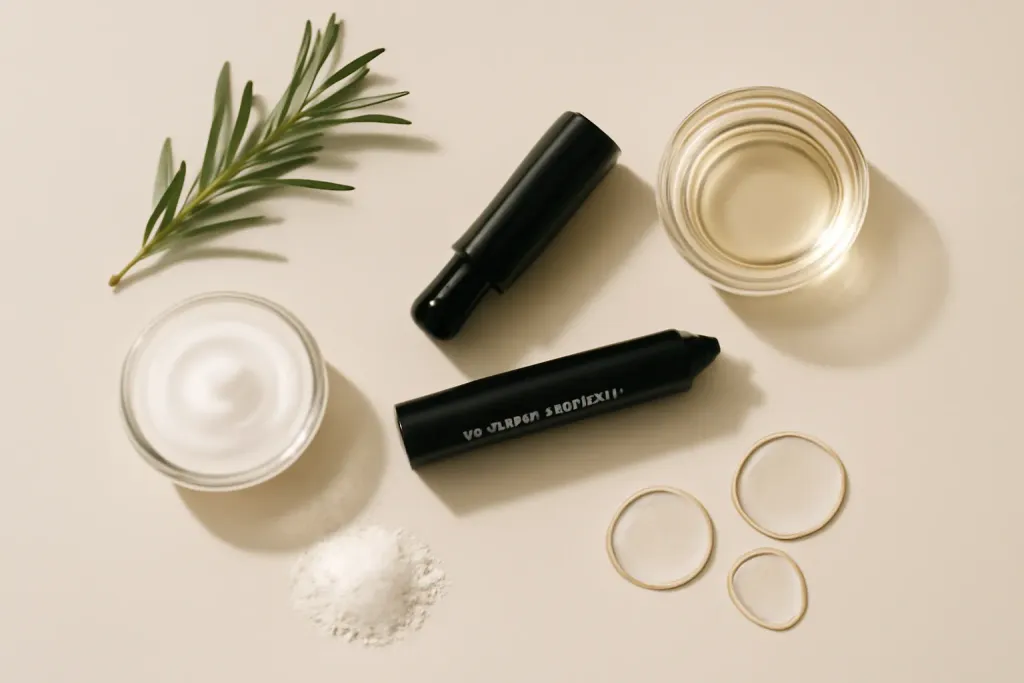
What Lash Adhesive Ingredients Do
When you shop for false eyelashes, the glue matters as much as the lash style. The right formula helps lashes hold, remove more cleanly, and feel comfortable enough for a single night out or a special event. Understanding lash adhesive ingredients can make label reading easier and help you compare formulas with more confidence.
Most lash glues are built from a few functional groups of ingredients. One group creates the bond that keeps the strip in place. Another group controls how fast the adhesive sets. Additives may adjust thickness, flexibility, color, or the feel of the formula on skin. Even when two products look similar on the shelf, their ingredient lists can behave very differently on the eye area.
It also helps to remember that lash adhesive is designed for the delicate skin around the eyes. That means simplicity matters. A shorter ingredient list is not automatically better, but every extra component deserves a purpose. If you are comparing products, look for formulas that clearly explain what each ingredient is meant to do and avoid ones with vague claims but no ingredient detail.
Common Base Ingredients You’ll See
Most temporary lash adhesives rely on a few common base ingredients. These are the ingredients that form the actual film or bond. One of the most familiar groups is acrylic polymers, which help create a flexible adhesive layer once the product dries. These polymers are used because they can cling well without becoming too brittle.
Some formulas also use latex or natural rubber derivatives. These ingredients can improve grip and elasticity, but they are not ideal for everyone. If you know you react poorly to rubber products, read the label carefully and look for latex-free wording in the ingredient list or product description. Keep in mind that wording on packaging should still be supported by the actual ingredient panel.
Another common ingredient in lash glue is water. Water acts as a carrier that makes the formula spreadable during application. Once the water evaporates, the remaining materials can form the bond. You may also see cellulose-based thickeners, which help the adhesive stay where you place it instead of running into the lash line.
Some products include film formers and resins that support hold and flexibility. These ingredients matter because an adhesive that is too rigid can feel uncomfortable, while one that is too soft may not stay neatly in place. For shoppers, the key takeaway is that the same basic job can be done by different ingredient combinations.
Ingredients That Affect Dry Time and Texture
Dry time is one of the biggest practical differences between lash adhesives. Ingredients that evaporate quickly can make the glue set faster, while heavier formulas may give you more room to position the strip. If you are new to false lashes, a slower-setting formula can be easier to work with because it leaves more time for adjustment.
Thickeners and stabilizers influence texture as much as bonding ingredients do. A gel-like formula may feel less runny and easier to control, especially if you are applying small amounts along the lash band. A thinner liquid can spread more easily but may require a steadier hand. Neither texture is inherently better; the better choice depends on your application style.
Some adhesives also include humectants or solvents that change how the formula feels while wet. These ingredients can make the product smoother during application, but they may also affect how much residue is left behind. If you prefer a cleaner finish on the lash band, it is worth paying attention to descriptions that mention easy application or simple cleanup, then checking the ingredient list for clues about what drives that performance.
Because the eye area is so sensitive, texture matters not just for convenience but for precision. Less mess means less chance of the glue creeping where you do not want it. That is why ingredient lists are useful: they can hint at whether a formula is likely to be crisp and controlled or soft and forgiving.
Colorants and Appearance: Clear, Black, and More
False-eyelash glue is often sold in clear or black versions, and the color usually comes from added pigments or colorants rather than the bond-making ingredients themselves. Clear adhesives can look cleaner during application and may be easier to use if you want a minimal finish. Black adhesives can blend with eyeliner and make the lash band less noticeable once dry.
The ingredient list may include carbon black or other approved colorants in darker formulas. In clear formulas, you are more likely to see a transparent base with few or no added pigments. The main thing to remember is that color does not automatically tell you anything about strength. A black adhesive is not always stronger than a clear one, and a clear adhesive is not necessarily less reliable.
If you are choosing between shades, think about your makeup routine. If you often wear liner, a black adhesive may help the band disappear into your look. If you want a softer finish or you are still learning to apply lashes, clear adhesive can be more forgiving visually while you practice placement. Ingredient lists can help confirm whether the color comes from a pigment-heavy formula or a lighter, simpler base.
Browse our recommended products
Our featured picks refresh periodically. While we update them, our editorial guides can help you find the right pick.
See our guides
Preservatives, Stabilizers, and Shelf Stability
Like many cosmetic products, lash adhesives may include preservatives to help keep the formula stable over time. Preservatives are not there to improve hold; they help reduce the chance that the product changes too much while it sits on your shelf. Stabilizers can serve a similar purpose by helping the ingredients stay blended and consistent.
If you see ingredients that help preserve the formula, that is usually a sign the product is designed to remain usable for a period after opening, as long as you follow storage directions. Still, the best product for you is one that stays consistent without an overly complicated ingredient list. Too many additives can make a formula harder to evaluate, especially if you are trying to identify what works best near your eyes.
Storage also matters. Heat, moisture, and repeated air exposure can alter how adhesive behaves, even when the formula itself is well made. Keep the cap tightly closed and avoid leaving the bottle in warm, steamy spaces. Good storage will not turn a poor formula into a great one, but it can help protect the ingredient balance the product was designed to deliver.
When comparing formulas, remember that stability ingredients support the product’s quality over time, not the immediate comfort of your eye area. If you want a cleaner-feeling option, focus on the full ingredient panel rather than assuming a longer list automatically means better performance.
Fragrance, Dyes, and Other Extras to Note
Some lash adhesives include fragrance, botanical extracts, or extra conditioning ingredients. These additions may sound appealing, but in a product used close to the eyes, more is not always better. Fragrance, in particular, is worth noting because it adds another variable to an already delicate application area.
Dyes and decorative color additives can also matter if you prefer a minimal formula. While a small amount of colorant is common in black adhesives, unnecessary extras may make the ingredient list longer without offering any clear benefit to the lash bond itself. If your goal is straightforward application, a simpler formula may be easier to assess.
Plant-derived ingredients are not automatically gentler, and synthetic ingredients are not automatically harsher. What matters is how the full formula is balanced. A cosmetic label can be helpful, but it is only one part of the picture. Use it to see what is included, then think about how many extra ingredients are truly necessary for the effect you want.
If you tend to prefer shorter ingredient lists, start there. A no-frills adhesive with the basic bonding, thickening, and preserving ingredients may be easier to understand than a formula filled with marketing extras. For many consumers, that clarity is the biggest advantage.
What to Avoid and When to Stop Using a Product
Because lash adhesive sits so close to the eye, it is smart to be selective about ingredients that may be more likely to cause discomfort for some users. If you know you have reacted to rubber, latex, fragrance, or certain cosmetic preservatives in the past, check the label before applying any new product. The same advice applies if you have very sensitive skin around the eyes.
It is also wise to avoid using a product if the formula has changed in color, smell, or texture from what you expected. That may be a sign the adhesive has aged or the ingredients have separated. When in doubt, do not force a product to perform. A fresh formula is usually the safer choice for temporary false eyelashes.
If you feel stinging, notable redness, swelling, or persistent discomfort, remove the lashes and stop using the adhesive. Do not keep testing the same product on irritated skin. If the reaction does not settle or the pain is significant, seek professional care. Eye-area irritation is not something to push through just because the product is meant for cosmetics.
Also remember that the strongest glue is not necessarily the best glue. A formula that stays put but feels harsh is not a good trade. For everyday consumers, the goal is a practical balance of hold, comfort, and simplicity.
How to Read the Ingredient Label Like a Smart Shopper
Reading lash adhesive ingredients gets easier once you know what to look for. Start with the first few ingredients, since those usually make up the bulk of the formula. Then scan the rest for anything that stands out, such as fragrance, latex-related terms, dyes, or ingredients you already know you prefer to avoid.
Next, compare the ingredient list to the product’s purpose. If the adhesive is meant for easy application, you may expect a smoother, more controlled texture. If it is described as clear or black, you should be able to see whether pigments or colorants are actually present. If it claims to be latex-free, the ingredient panel should support that statement.
It also helps to think in terms of priorities. Some shoppers want the shortest possible list. Others care more about a black finish that blends with liner. Others want a formula that is easy to place because they are new to falsies. There is no single best ingredient profile for everyone, but there is likely a better fit for your routine.
The most useful habit is simple: read the label before you buy. Once you know how common ingredients function, the list stops feeling intimidating and starts becoming a practical shopping tool. That makes it much easier to choose an adhesive that suits temporary false eyelashes without guessing.