What 'hooded eyes' means for lash shopping
Hooded eyes have a fold of skin along the brow bone that partially covers the crease of the eyelid, which can visually hide part of a lash band or lash length when the eye is open, even though the same lash looks different with eyes closed. This doesn't limit your options as much as it changes which shapes read most clearly once your eyes are open and looking straight ahead.
Shapes that tend to work well
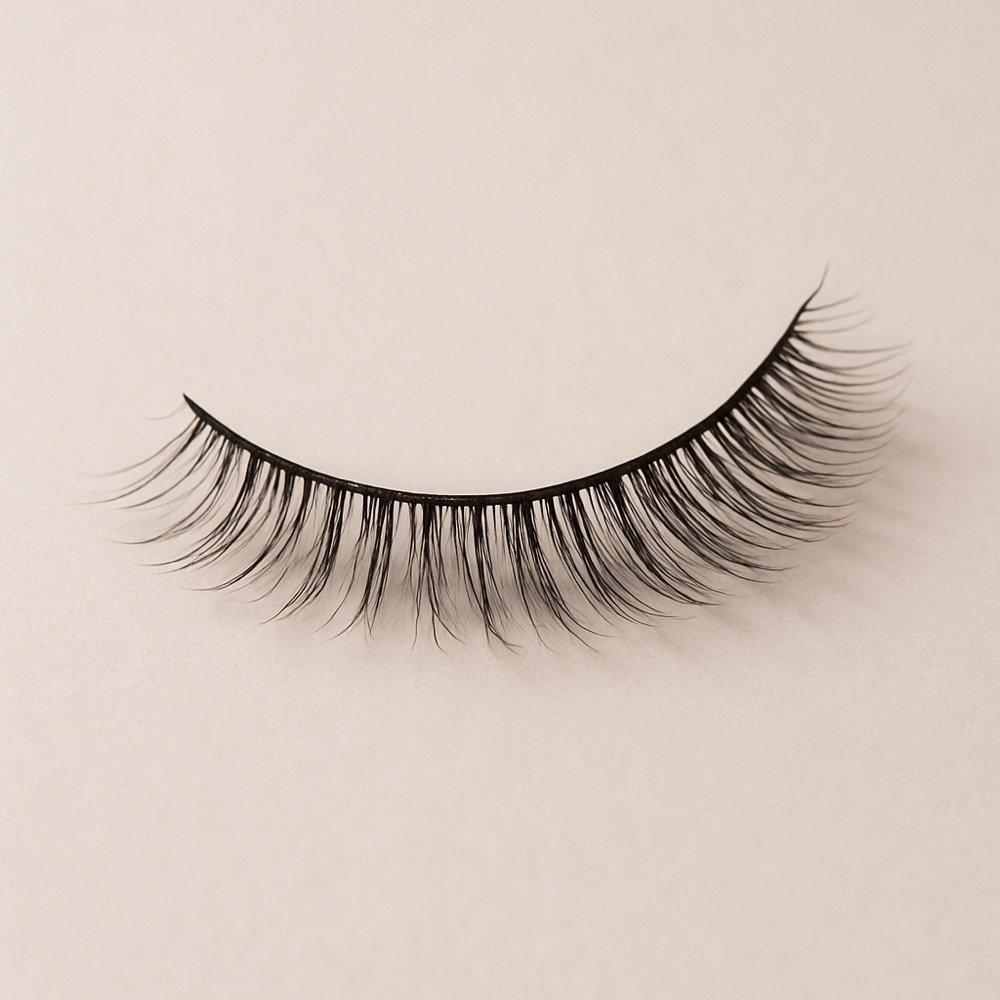
Lash styles with length built up through the center and outer corner, rather than the inner corner, tend to remain visible even when a hooded crease covers part of the lid. A subtle cat-eye shape, where the lash tapers longer toward the outer corner, can also help create a visible lift rather than getting lost under the brow bone. Our general buying guide covers eye-shape matching more broadly if you're comparing multiple considerations at once.
Why band flexibility matters here
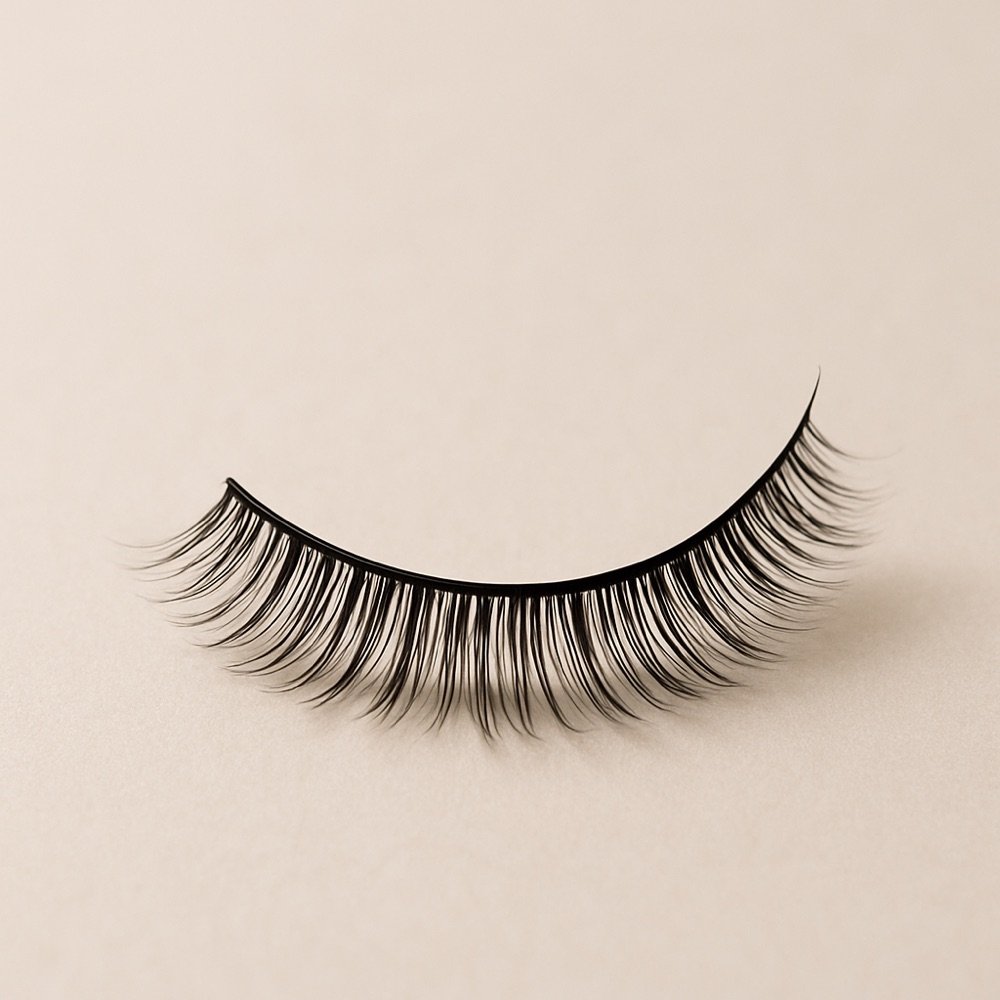
A stiff, unbending band can sit awkwardly against the curve of a hooded lid, creating gaps at the inner or outer corner where the band doesn't follow your natural eye shape. A more flexible, thinner band is easier to curve to fit, which matters more for hooded eyes than for eye shapes without a pronounced crease fold.
Application tips specific to hooded lids
- Apply lash adhesive or clusters with your eyes open and looking straight into the mirror when possible, rather than closed, since hooded lids can look different in each position.
- Keep the band or clusters close to the lash root -- any gap is more likely to catch under the crease fold and become visible.
- Consider trimming a strip lash slightly shorter at the inner corner if it feels like it's pressing against the crease; our trimming guide covers this process.
Browse our recommended products
Our featured picks refresh periodically. While we update them, our editorial guides can help you find the right pick.
See our guidesWhat tends not to work as well
Very heavy, dramatic volume concentrated at the inner corner can end up mostly hidden under a hooded crease, which means the visual effort doesn't always show through in the finished look. Similarly, an extremely stiff, thick band can create an uneven gap along a hooded lid's curve. Neither of these is a hard rule -- personal eye shape varies -- but they're common patterns worth testing for yourself before committing to a specific style for an important occasion.
If you also wear glasses
Hooded eyes and glasses can compound the same visibility challenge, since glasses frames sometimes sit close to the brow bone as well. If this applies to you, favor lash styles with definition through the center and outer edge rather than styles relying on dramatic inner-corner volume, and see our broader notes on choosing lashes for glasses wearers as that guide is added to our library.
Pairing eyeliner with lashes for hooded eyes
A thin, precise eyeliner line along the upper lash line can help visually anchor a false lash band, especially when a hooded crease periodically covers part of it depending on your gaze or expression. Because the crease fold means eyeliner can sometimes transfer or smudge onto the fold itself, applying liner in thin layers and allowing each layer to set briefly before adding more tends to hold up better than one thick application.
Winged liner that extends slightly past the outer corner can also reinforce the same lifting effect a cat-eye lash shape is aiming for, giving the two elements a chance to work together rather than competing for visual attention.
Cluster or strip lashes for hooded eyes?
Both formats can work well for hooded eyes, but they solve the fit challenge differently. Cluster lashes let you concentrate volume precisely where it will remain visible -- typically the center and outer sections -- while skipping the inner corner where a crease is most likely to hide length anyway. Strip lashes require finding a pre-shaped design that already emphasizes the right areas, which can take some trial and error across a couple of different products before finding a shape that consistently reads well on your specific lid.
Testing a style before committing to it
Because hooded eyes vary quite a bit in exactly how much of the lid is covered and under what conditions (some people's hoods are more visible when smiling or talking, for example), it's worth testing a new lash style under a few different expressions and angles before deciding it's a good fit. Look in the mirror with your eyes fully open and relaxed, then again while talking or smiling naturally, since the crease fold can shift more than expected between a static pose and normal movement.
If a style consistently disappears under the crease across these checks, that's a clearer signal to try a different length distribution than a single glance in a still mirror would give you.
Browse our recommended products
Our featured picks refresh periodically. While we update them, our editorial guides can help you find the right pick.
See our guidesWhere lashes fit into your makeup routine
For hooded eyes specifically, the order of your makeup steps can affect how well false lashes read once applied. Many people find it easier to complete eyeshadow and liner first, then apply false lashes last, since eyeshadow blending can otherwise disturb a freshly placed lash band. If you use a matte transition shade in the crease to add depth, doing this before lashes also means you can better judge exactly how much of the crease shows once your eyes are open, which helps you choose lash placement more accurately.
Questions hooded-eye shoppers often ask
A few questions come up repeatedly from shoppers with hooded eyes: whether a shorter lash always looks better (not necessarily -- it depends on where the length is placed, not just how long it is), whether hooded eyes limit false-lash options overall (they don't; they mainly change which specific shapes read best), and whether the same lash style will work identically for both eyes (often not exactly, since natural asymmetry is common -- a slightly different trim on each side, as covered in our trimming guide, is a normal and expected adjustment rather than a sign of a flawed product).
Hooded eyes vs monolid eyes: a quick comparison
Hooded and monolid eyes are sometimes confused, but they're distinct shapes with different lash considerations. A monolid has little to no visible crease fold at all, while a hooded eye has a crease that's simply covered by an overhanging fold of skin above it. Because a monolid lid doesn't have a fold covering part of the lash line, length distributed more evenly across the band, rather than concentrated at the center and outer corner, more often reads well. If you're unsure which description fits your own eyes, look at your open eye in a mirror: if you can see a distinct crease line covered partially by skin above it, that's a hooded shape; if there's little to no visible crease at all, that's closer to a monolid.
A few final shopping tips
When comparing listings, product photos shot on a model with a similar eye shape to your own (where available) are more useful than a generic close-up shot, since they give a better sense of how a style actually sits on a hooded lid rather than an idealized flat presentation. Reading the product description for band flexibility and length distribution, as covered throughout this guide, will tell you more than the photo alone.
Finally, remember that trial and error is normal. Even with all of this guidance in hand, the first style you try may not be the one you settle on -- and that's a useful, low-cost way to learn more about your own eyes than any general guide can tell you in advance.