The short answer
If you are unsure, start with a C curl. It is the classic curve: it lifts the lashes and opens the eye without looking extreme, and it suits most eye shapes. Choose a D curl when your own lashes are straight or point downward, or when you want a clearly dramatic, wide-open look. D has a stronger bend, so it sits higher and rises further from the lash line.
Both are common in cluster lashes, strip lashes and DIY lash extension kits. You can compare them side by side in the chart below, or use the full curl and length chart.
C curl and D curl side by side
| C curl | D curl | |
|---|---|---|
| Lift | Medium | Strong |
| Look | Classic, eye-opening, natural | Dramatic, wide-eyed |
| Best natural lashes | Pointing slightly up or level | Straight or pointing down |
| Hooded eyes | A safe start | Often shows more under the fold |
| Everyday wear | Easy | Can feel strong on upturned lashes |
| Beginner choice | Yes, the usual start | Second set, once you know your curl |
Match the curl to your own lashes
The curl on the lash should continue the curve of your own lashes, not fight it. Look at your lashes in a mirror from the side. If they curve upward, a C continues that curve. If they point straight out or down, a D lifts them. A curl that is much stronger than your own can touch the lid or stand away from the lash line.
- Upturned natural lashes: start with C, or even a softer B or J.
- Level lashes: C is a good middle, with D if you want more lift.
- Straight or downward lashes: try D, or CC (between C and D).
Not sure what your eye shape needs? The eye shape finder explains how to tell, and the lash map pairs curls with lengths.
C curl or D curl by eye shape
| Eye shape | Start with | Why |
|---|---|---|
| Almond | C | Most styles work, so keep the curve classic |
| Hooded | C or D | A little more lift helps lashes show under the fold |
| Monolid | D | More lift keeps them visible when the eyes are open |
| Downturned | D or CC | Lifts the outer corner |
| Round | C | Keeps the look balanced |
| Upturned | C | Already lifted; avoid overdoing it |
See the hooded eyes guide for more.
See the curves
The chart below is original artwork. Choose two curls and compare the lines. A bigger bend means more lift. The chart also shows lengths, because curl and length work together: a long D curl is much more dramatic than a short one.
Pairing curl with length matters. Keep lengths within a couple of millimetres of your own lashes for a natural look, and go longer only at the outer corner for a lifted shape.
| Format | How it goes on | Best for | Watch out for |
|---|---|---|---|
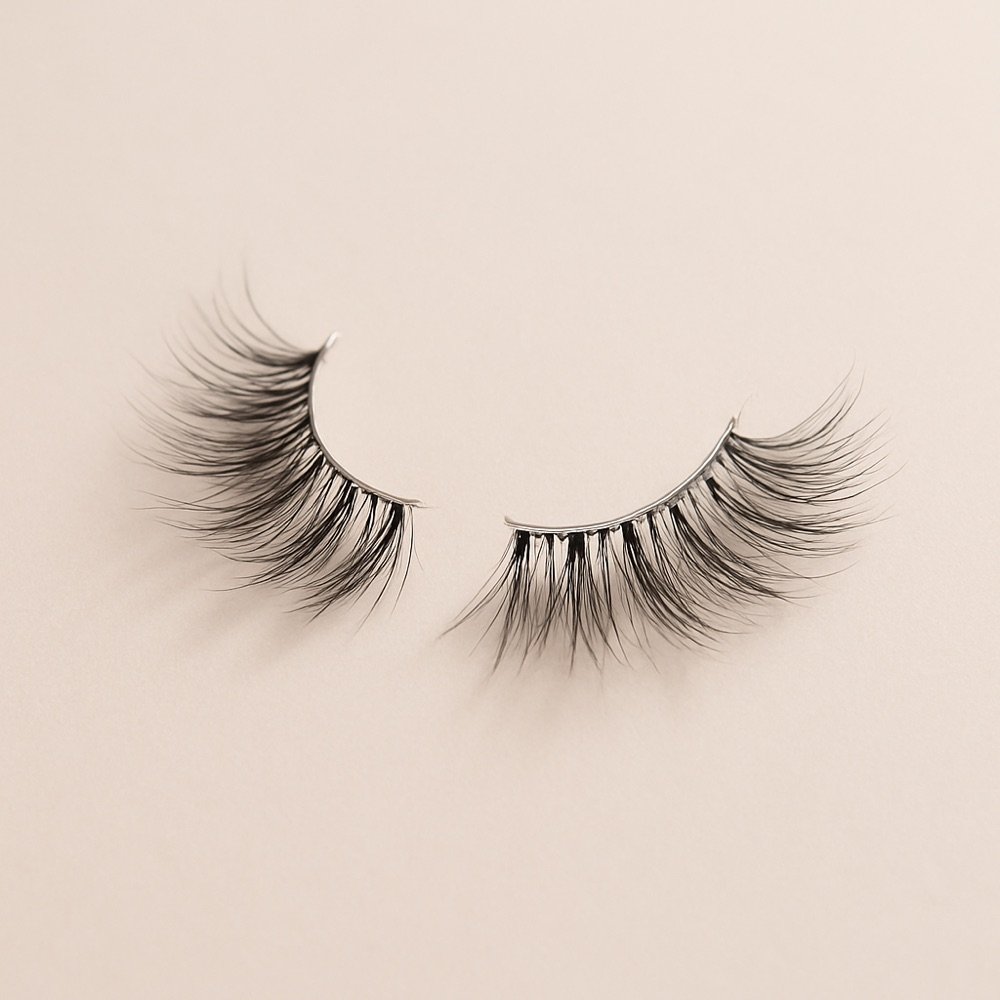
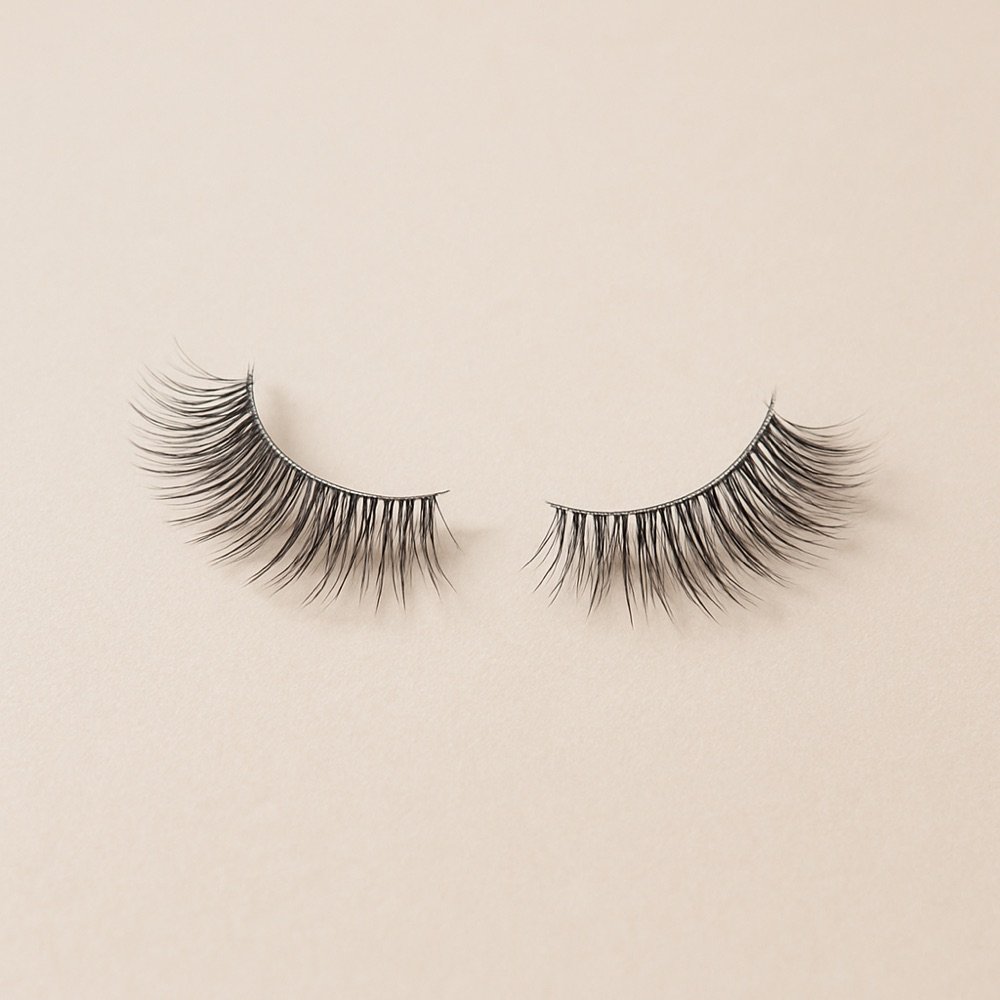
| Strip lashes | One band placed along the whole lash line | First-timers and quick event looks | A stiff band can lift at the corners |
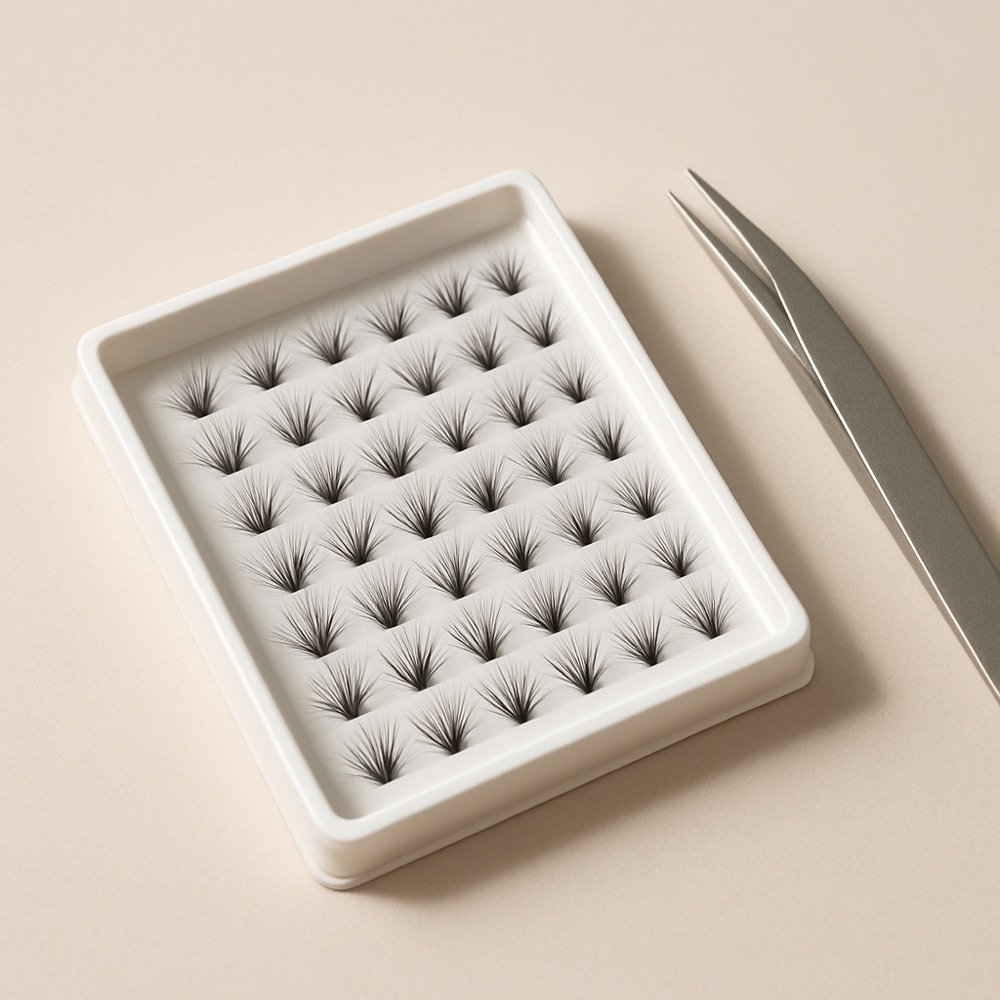
| Cluster lashes | Small sections placed one at a time | Custom density and placement | Needs patience and a steady hand |
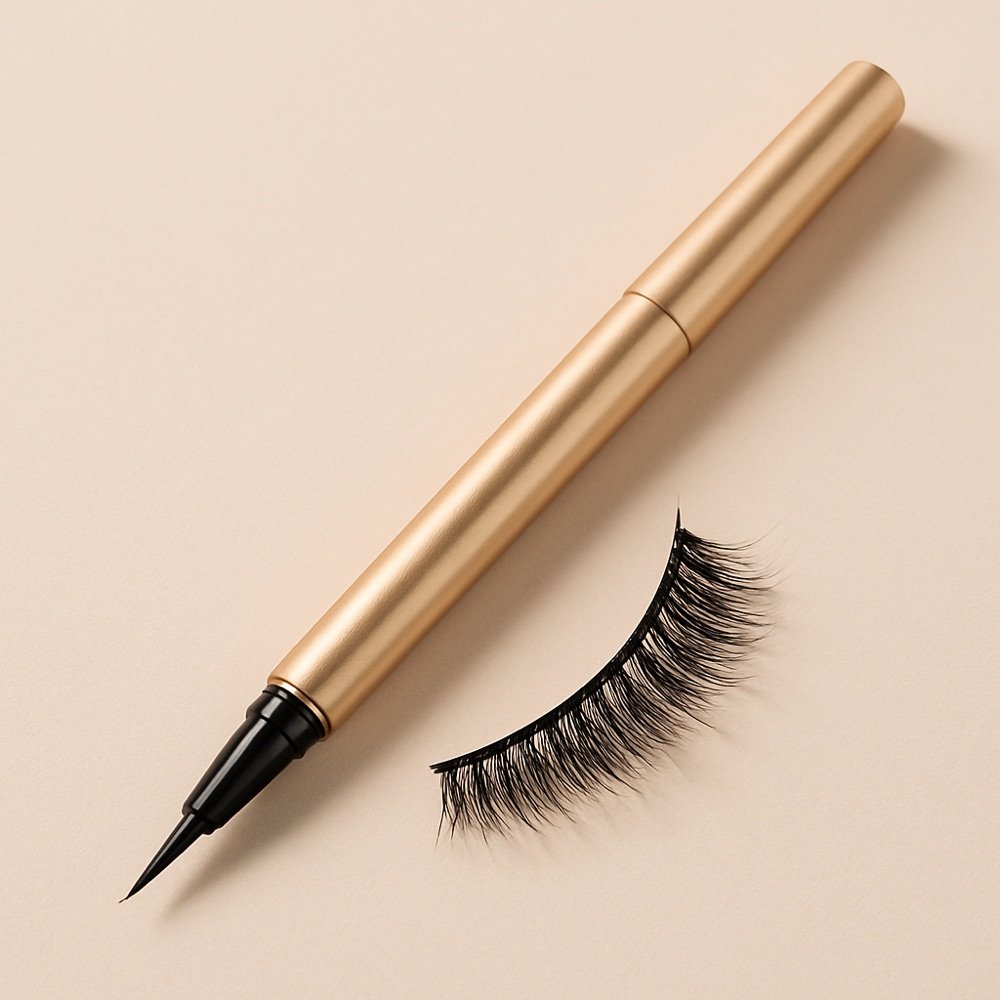
| Magnetic lashes | Magnets (liner or sandwich pairs) instead of glue | Anyone who wants to skip lash glue | Magnets can be fiddly; check the maker's guidance |
What about J, B, CC, L and M?
There are more curls than C and D. J and B are softer. CC sits between C and D. L and M have a flat base and a sharp bend for maximum lift. They are less common in beginner kits. If a set offers only one curl, check the pack: it normally says C, D or CC.
Makers mix their own conventions, so the exact bend of a C from one brand can differ from another's. If you like a curl, note the brand and length that worked.
How to try a curl before you commit
- Hold the cluster or strip against your lash line without glue.
- Look straight ahead with your eyes open.
- Check whether the lash touches your lid or stands away from your own lashes.
- Swap the curl if it does, and check again.
Once you pick a curl, apply clusters with our cluster lash guide.
The other curls you will see on a listing
C and D are the most common, but a listing may also show J, B, CC, L or M. They are a naming convention, so the same letter can look slightly different from one maker to the next.
| Curl | Lift | What it looks like | Often chosen for |
|---|---|---|---|
| J | Barely there | Very slight curve, like a natural lash line | Lashes that already point up |
| B | Soft | A little more bend than J | A soft everyday look |
| C | Medium | The classic curve | Most eye shapes, first sets |
| CC | Medium to strong | Between C and D | Straight or slightly downward lashes |
| D | Strong | A wide-open, dramatic curve | Straight or downward lashes, hooded lids |
| L | Sharp | Flat base then a sharp bend | Maximum lift, cat-eye looks |
| M | Sharp, early | L with a shorter flat base | Downward-angled lashes aiming for a cat eye |
Open the curl and length chart to see each curve drawn side by side.
How to choose in three steps
- Look at your own lashes from the side. Do they curve up, go straight out or point down?
- Pick one step stronger than your natural curl. That lifts without fighting your lashes.
- Try it in one corner first. Place a single cluster or hold a strip up to the mirror with your eyes open.
If the lash tilts away from yours and looks like a separate row, go one step softer. If it flattens against your lid, go one step stronger.
Curl mistakes and how to fix them
| Mistake | What you see | Fix |
|---|---|---|
| D curl on upturned lashes | A hook that sticks up from your own lashes | Swap to C, B or J |
| C curl on straight lashes | Lashes that point at the lid | Try CC or D |
| Mixing curls in one set | Gaps and uneven lift | Use one curl across the set |
| Judging curl with eyes closed | A look that does not match when open | Check with your eyes open |
| Curl too strong for the length | Short lengths look sharp | Pair D with medium or longer lengths |
Curl and length work together
Curl decides the direction of the lash, and length decides how far it travels. A D curl on a short length looks like a gentle lift; the same curl on a long length can look dramatic. The lash map pairs a length with a curl for each zone of the lash line, and the cluster application guide shows where each piece goes.
When you are choosing a cluster set for the first time, our beginner guide lists sets with their lengths, and lashes for hooded eyes explains which curl tends to show under a fold.