
Free tool
Lash curl chart
Compare J, B, C, CC, D, L and M curls side by side, and see how each length looks on a generic eye.
C (solid) vs D (dashed): The classic curve: opens the eye without looking extreme. / A dramatic curve for a wide-open look.
Profiles are original illustrations of the usual curve shapes. The eye is a generic illustration at an approximate scale. Curl letters are common industry names; exact curves differ by maker.
How to use the curl chart
Pick two curls
Choose Curl A and Curl B to see their side profiles drawn on top of each other. C and D are loaded first.
Slide the length
Move the length slider from 8 to 20 mm to see how long a lash looks against a generic eye.
Match it to your lashes
Straight or downward natural lashes usually want more curl; upward-pointing ones need less. Then open the lash map.
All seven curls side by side
J curl
Barely-there
A very slight curve; reads as the natural lash line.
B curl
Soft
A soft, natural curve with a little more bend than J.
C curl
Medium
The classic curve: opens the eye without looking extreme.
CC curl
Medium-strong
Between C and D: a clearly lifted, eye-opening curve.
D curl
Strong
A dramatic curve for a wide-open look.
L curl
Sharp
A flat base with a sharp bend that tilts the lash up.
M curl
Sharp, early
Like L with a shorter flat base, so the lash points almost straight up.
| Curl | Lift | Look | Best for |
|---|---|---|---|
| J | Barely-there | A very slight curve; reads as the natural lash line. | Natural lashes that already point up. On straight or downward lashes it can look heavy. |
| B | Soft | A soft, natural curve with a little more bend than J. | Upward-pointing natural lashes and a soft everyday look. |
| C | Medium | The classic curve: opens the eye without looking extreme. | Most eye shapes; the usual beginner starting point. |
| CC | Medium-strong | Between C and D: a clearly lifted, eye-opening curve. | Straight or slightly downward natural lashes. |
| D | Strong | A dramatic curve for a wide-open look. | Straight or downward natural lashes, hooded lids and monolids. Can feel extreme on lashes that already point up. |
| L | Sharp | A flat base with a sharp bend that tilts the lash up. | Maximum lift and dramatic cat-eye looks. The flat base can feel heavy on downturned eyes. |
| M | Sharp, early | Like L with a shorter flat base, so the lash points almost straight up. | Downward-angled natural lashes aiming for an extreme cat-eye. |
Lash length chart: what each range is used for
| Length | Where it is usually used | Look |
|---|---|---|
| 6 to 8 mm | Inner corner and very natural sets | Barely noticeable |
| 8 to 10 mm | Inner corner and everyday maps (an 8, 9, 10, 9, 8 map is a common beginner example) | Natural and soft |
| 10 to 12 mm | The centre and a natural outer corner | Defined but wearable |
| 12 to 14 mm | The peak of doll maps and the outer corner of cat-eye maps | Dramatic |
| 14 to 16 mm | The top of the typical range, for event looks | Very dramatic |
| Above 16 mm | Outside the range this site uses. Check a maker's chart first | Statement lashes |
Gear that helps
Starting points for this topic. Each link opens an Amazon search.
-
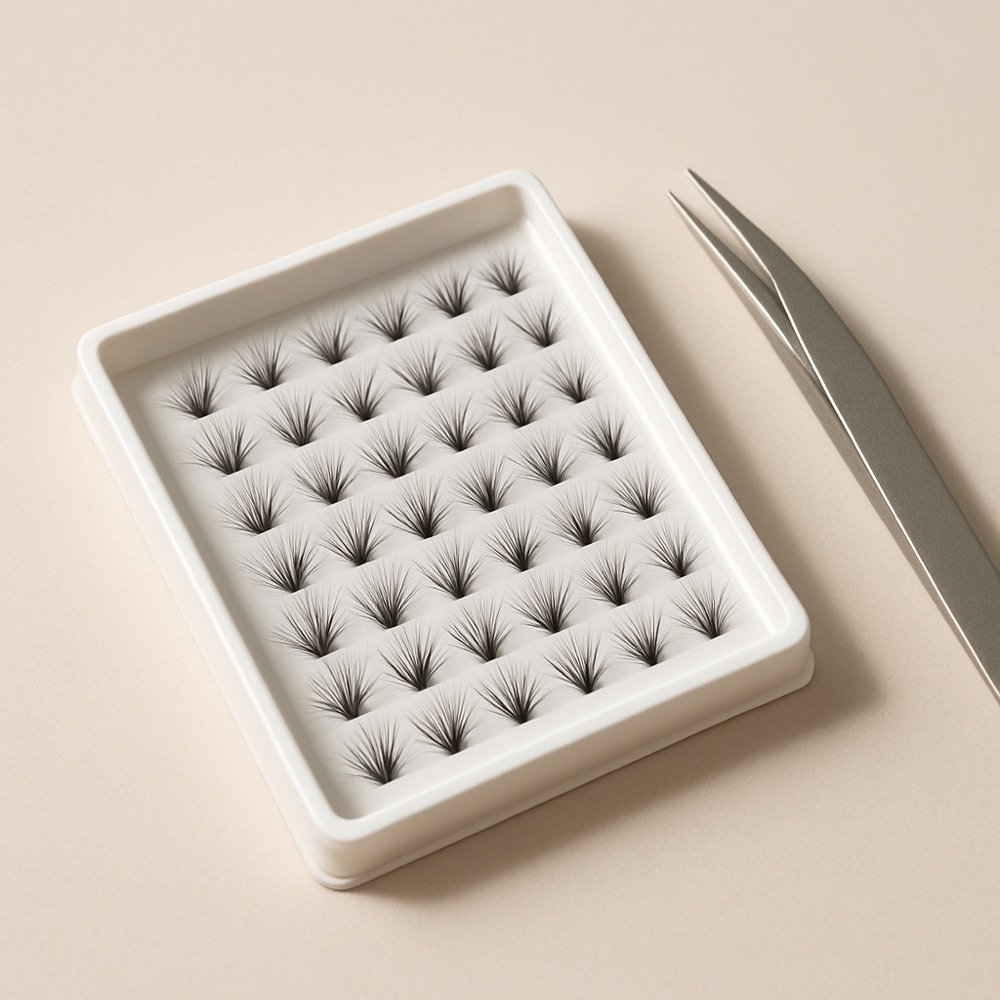
Cluster Lashes
Cluster Lash Starter Set
A beginner-friendly way to try individual clusters before committing to a full strip look.
Search Amazon for Cluster Lash Starter Set -
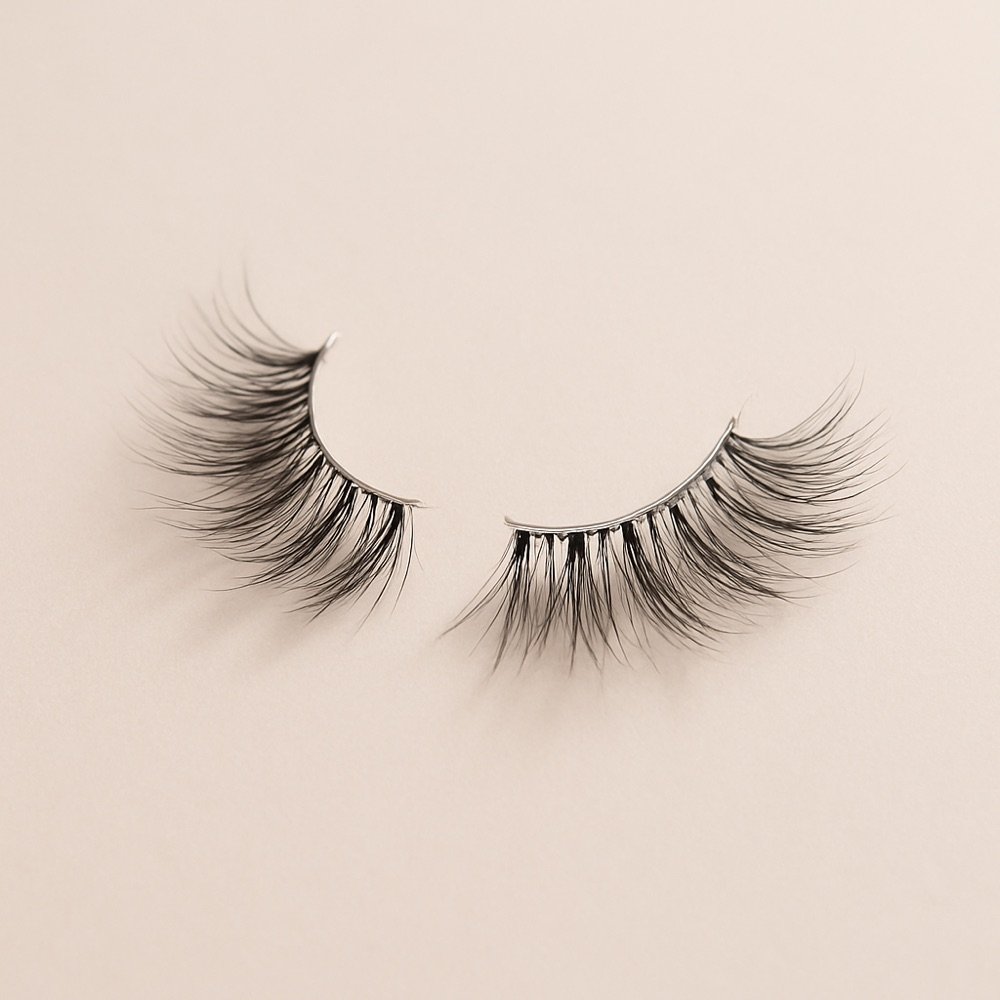
Strip Lashes
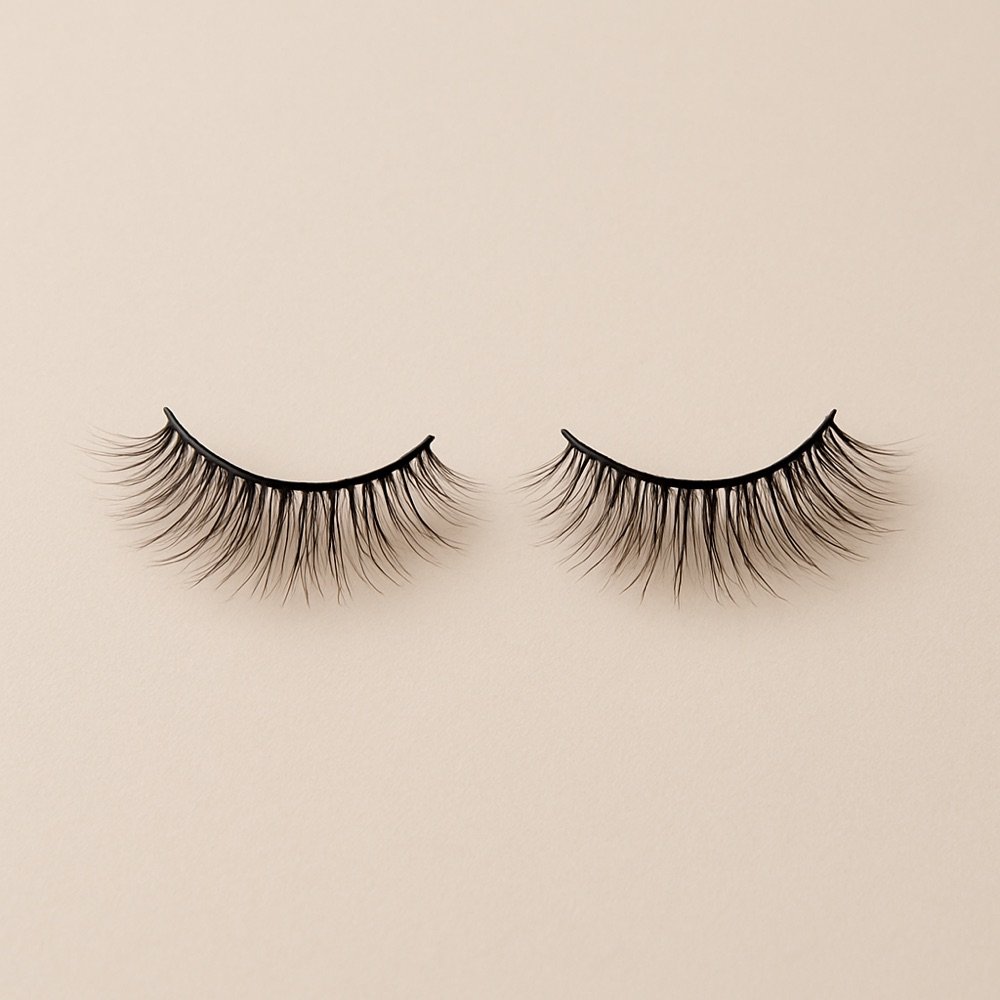
Wispy Strip Lashes
A fluttery, mixed-length strip style built for a soft, natural-looking finish that blends with most natural lash lines.
Search Amazon for Wispy Strip Lashes -
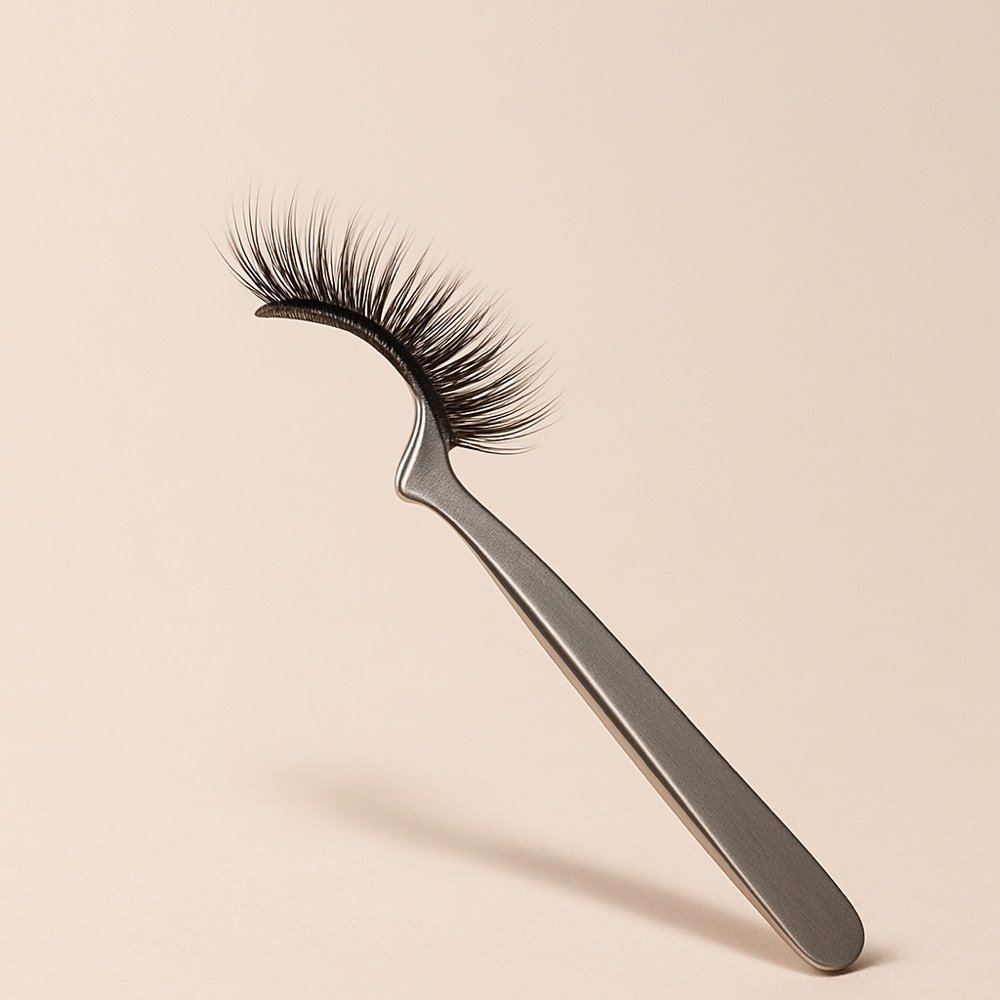
Glue & Tools
Precision Lash Applicator
A handheld applicator tool shaped to help place strip or cluster lashes closer to the natural lash line.
Search Amazon for Precision Lash Applicator -
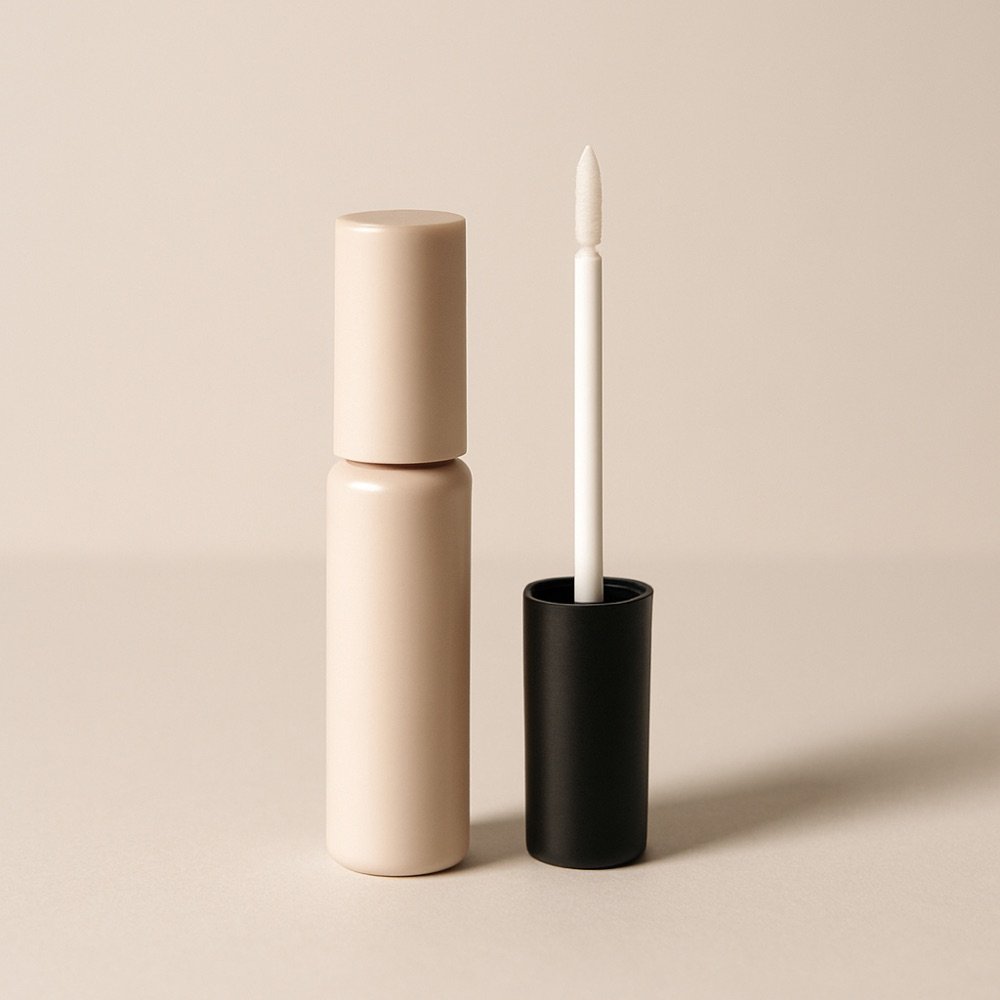
Glue & Tools
Latex-Free Lash Adhesive
A latex-free adhesive formula aimed at shoppers who want to avoid latex-based lash glue ingredients.
Search Amazon for Latex-Free Lash Adhesive -
Lash Care
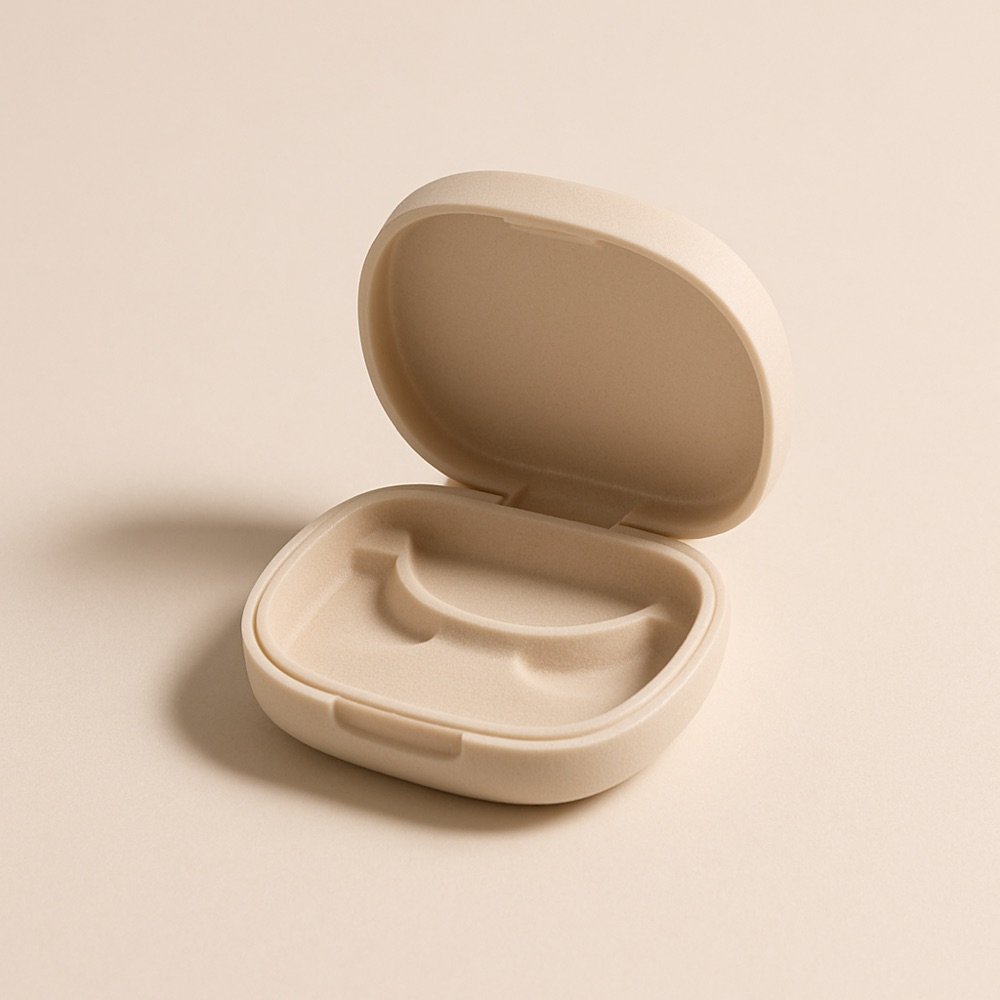
Compact Lash Storage Case
A structured case designed to protect lash shape between wears, useful for shoppers who reuse lashes multiple times.
Search Amazon for Compact Lash Storage Case -
False Eyelashes
Faux-Mink Style Lashes
A synthetic, faux-mink-style fiber built to mimic a softer, more natural fiber look without using animal-derived materials.
Search Amazon for Faux-Mink Style Lashes
As an Amazon Associate, OnlyEyelashes earns from qualifying purchases. Links open an Amazon search for the type of product described; we do not show prices or ratings. Details.
Frequently asked questions
What do the lash curl letters mean?
They name how much a lash bends. J and B are gentle, C is the classic curve, CC sits between C and D, D is strong, and L and M have a flat base and a sharp bend for maximum lift. The letters are common industry names, not a formal standard.
What is the difference between C and D curl?
A C curl opens the eye without looking extreme and suits most people. A D curl is more dramatic and tends to suit straight or downward natural lashes, hooded lids and monolids.
Which curl is best for straight lashes?
Straight or downward natural lashes usually suit CC or D, because a gentle curl can leave them pointing down. Upward-pointing lashes often need only J, B or C.
What length should I choose?
Typical guides put lengths at about 6 to 16 mm. Around 8 to 10 mm suits the inner corner, 10 to 12 mm the centre, and 12 to 14 mm the outer corner of dramatic maps. Stay within about 2 to 3 mm of your own lashes.
Do all brands use the same curl letters?
Not exactly. The naming is shared but the exact curve differs by maker, and some use extra letters such as U or I. Check the maker's own chart.
Can I mix curls in one set?
Yes. One example from supplier guides is C curls in the centre with CC or D at the outer corners for a subtle cat-eye. The lash map does this automatically for cat-eye and fox styles.
More free lash tools
Link to this tool
Share it or add it to your own page. Copy the address, or paste the HTML.
Sources and last checked
Last checked: . Lash maps, styles and curl/length guidance are styling conventions, not measurements. Every number is a starting point you can adjust.
- National Salon Supplies: Grafting lash guide (lengths, mapping, styling): Length range 6 to 16 mm; natural, cat-eye, doll-eye and squirrel maps by inner/middle/outer position; curl advice by eye shape (hooded, monolid, downturned); wispy spikes 2 to 3 mm longer; keep lengths within 2 to 3 mm of the natural lash.
- Light Heart Lash: Lash maps for beginners: Balanced five-section map (8, 9, 10, 9, 8 mm); start near 8 to 9 mm at the inner corner and rise in 1 mm steps; C curl as the beginner starting point, CC or D for a more open look.
- Divine Lashes: Eyelash extension curls explained: What J, B, C, CC, D, L and M curls look like and which natural lash direction each suits.
We checked these pages on the date above. Makers do not agree on every number, so the tool keeps to the conservative middle and says so where it matters. OnlyEyelashes covers DIY cluster and strip lashes worn at home, not salon extensions.
OnlyEyelashes is not a salon, manufacturer or medical provider, and this tool is not medical advice. Some links on this page are Amazon affiliate links; see our affiliate disclosure.