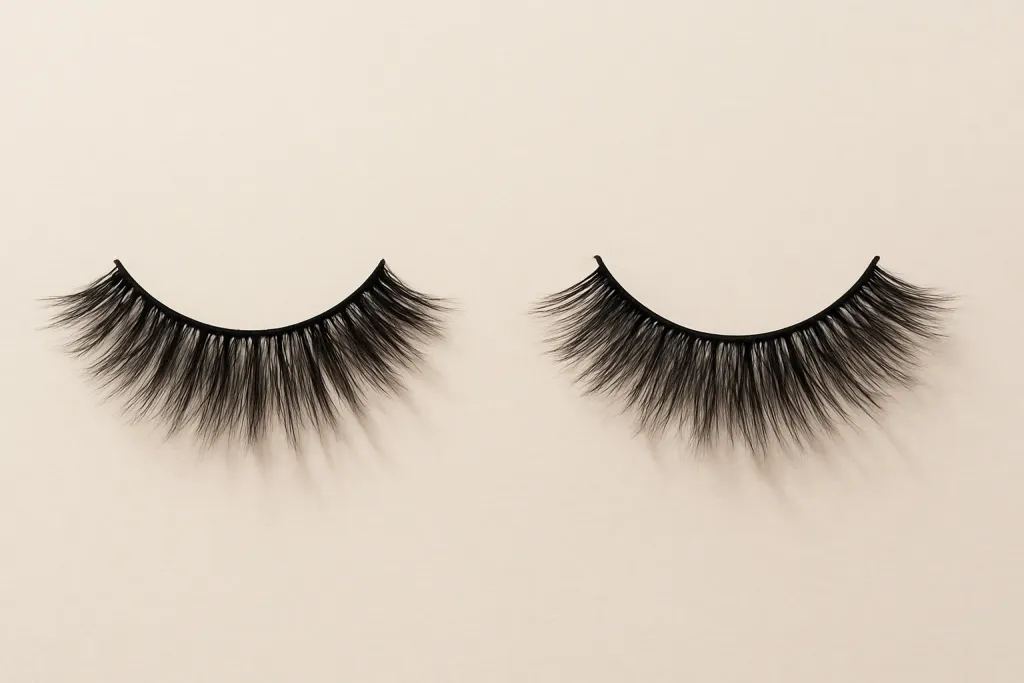
What Synthetic, Faux-Mink, and Plant-Fiber Lashes Mean
When shoppers compare false lashes, the material name can be just as important as the style. The phrase synthetic vs faux-mink lashes usually refers to how the lash fibers are made and how they look on the eye, while plant-fiber lashes bring a different material story to the table. None of these categories is automatically better than the others; each simply creates a different finish, feel, and use case.
Synthetic lashes are typically made from man-made fibers. They are often designed to hold a bold curl, create visible definition, and deliver a more dramatic effect. Faux-mink lashes also use man-made materials, but they are styled to imitate the soft, feathery appearance associated with mink-inspired lash looks. Plant-fiber lashes are made with fibers derived from plant-based materials and are usually positioned as an alternative for shoppers who want a different material origin, often with a lighter aesthetic.
Because the label can describe both material and appearance, reading product details matters. Two pairs may both be called synthetic, yet one may look glossy and dense while another looks wispy and separated. The same is true for faux-mink: one pair can be subtly fluffy, another more dramatic. Plant-fiber options can also vary widely in thickness, band design, and finish.
How the Materials Differ in Look
Material choice changes how lashes read from a distance and up close. Synthetic lashes often have a more defined silhouette, which can make them a strong match for a bold eye look or a full-glam makeup style. Some synthetics appear slightly shinier or more structured, especially when the fibers are denser or more uniform in shape.
Faux-mink lashes are usually chosen for a softer visual effect. In the synthetic vs faux-mink lashes conversation, faux-mink is often the option people pick when they want the impression of airy volume without the heavier, more obvious look some synthetic styles can create. The fibers may taper more naturally, creating a fluffy edge and a more blended finish along the lash line.
Plant-fiber lashes can sit somewhere between these looks depending on how they are processed. Some are designed to appear soft and feathery, while others offer a cleaner, more modern finish. The main point is that the material alone does not guarantee the final appearance; curl pattern, lash length, density, and band construction all influence the result.
If you are choosing by finish, think about the effect you want in natural daylight. Do you want the lash to quietly enhance your eyes, or do you want a noticeable frame? That question often points you toward faux-mink for softness, synthetic for stronger definition, or plant-fiber for a lighter-feeling material story with a range of visual outcomes.
Comfort, Band, and Feel Factors
The fiber type gets a lot of attention, but the lash band often matters just as much for comfort. A pair with a flexible band can be easier to position and may sit more naturally along the eye shape. A stiffer band can still work well, but it may take a bit more patience to fit and blend.
Synthetic lashes may feel more structured because the fibers themselves are often designed to keep a defined shape. That can be helpful if you like a crisp finish. Faux-mink lashes are frequently praised for a softer touch and a lighter visual profile, which can make them a comfortable choice for people who do not want an obviously heavy lash look. Plant-fiber lashes are often considered by shoppers who like the idea of a more natural-feeling material makeup can offer, though comfort still depends on the specific band and lash design.
For many people, the best way to judge comfort is to look at the whole construction: band width, flexibility, lash density, and how much trimming may be needed. If a strip is too long for your eye shape, it can lift at the corners or press in the wrong places. A small trim can make a bigger difference than switching between material types.
It also helps to remember that eye comfort is personal. What feels featherlight to one person may feel distracting to another. If you notice ongoing redness, pain, swelling, or persistent irritation after using false lashes, stop using them and check with a professional care provider.
Synthetic vs Faux-Mink Lashes Side by Side
In a practical sense, synthetic vs faux-mink lashes is often a comparison between a more defined finish and a softer finish. Synthetic styles are commonly chosen when you want noticeable density, stronger shape, and a look that reads clearly in makeup. Faux-mink styles are generally selected for a fluffy, blended effect that can complement everyday makeup or softer glam.
Here is a simple way to think about them:
- Synthetic: often bolder, more uniform, and better for a structured lash statement.
- Faux-mink: often softer, lighter in appearance, and better for a feathery, blended look.
- Plant-fiber: a separate material category that may lean soft or defined depending on the design.
When shoppers ask which is “better,” the more useful question is which one matches the makeup look they already enjoy. If you favor liner, cut crease, or full-face glam, synthetic styles may fit your routine. If you like polished everyday makeup, faux-mink can deliver enhancement without dominating the eye. Plant-fiber lashes may appeal to anyone who wants to explore a different material source while still choosing from natural to dramatic designs.
It is also worth noting that brand naming is not always standardized. One company’s faux-mink may be another company’s soft synthetic. Reading product copy carefully is the best way to understand what you are buying.
Browse our recommended products
Our featured picks refresh periodically. While we update them, our editorial guides can help you find the right pick.
See our guides
Where Plant-Fiber Lashes Fit
Plant-fiber lashes are part of a broader move toward alternative lash materials. For beauty shoppers, they can be interesting because they offer a different origin story from traditional man-made lash fibers. That said, the experience of wearing them still depends on the full product design, not just the source of the fibers.
Some plant-fiber lashes aim for a soft, airy finish, which can make them a good option for people who want subtle enhancement. Others are built for more volume or length and are meant to stand out. Because the category is broad, it is helpful to compare the style description, band type, and lash spacing rather than assuming all plant-fiber lashes will look or feel the same.
Plant-fiber options may appeal to shoppers who are curious about the material difference between fibers derived from plants and standard synthetic alternatives. If you are comparing them within the synthetic vs faux-mink lashes conversation, plant-fiber styles add another dimension: not just how the lashes look, but what they are made from. Still, the best result comes from matching the design to your eye shape and makeup habits.
As with any false lash, the right fit matters. If the band extends too far past your outer corner or pinches at the inner corner, the material choice will not solve that problem on its own. A good trim and careful placement usually matter more than the label on the box.
Choosing the Right Style for Your Routine
The easiest way to choose between synthetic, faux-mink, and plant-fiber lashes is to start with your routine rather than the product name. Ask how much definition you usually wear, whether you prefer a visible or subtle lash line, and how much time you want to spend on application. Those answers will quickly narrow the field.
If you like bold eyes and a more noticeable lash frame, synthetic styles may fit best. If you want a softer finish that still adds polish, faux-mink lashes are often the most flexible everyday choice. If material origin is a priority in your search and you want to explore a different category, plant-fiber lashes are worth comparing carefully.
Think about the rest of your makeup as well. A very dramatic lash can overpower a soft, fresh face if the rest of the look is minimal. On the other hand, a subtle lash may disappear next to a strong liner or heavy shadow. The goal is balance. When lashes complement your makeup rather than compete with it, the overall result usually looks more intentional.
It can also help to keep a small lash toolkit nearby: compact scissors for trimming, tweezers or fingers for placement, and a mirror that lets you check both eyes from a slight distance. These basics are useful regardless of whether you choose synthetic, faux-mink, or plant-fiber strips.
Care, Removal, and Safety Basics
Temporary false lashes last longer in your routine when they are handled gently. After use, remove them carefully from the outer edge rather than tugging at the band. If glue is stuck to the strip, loosen it gradually so the fibers stay in shape. Store the lashes in their tray or a clean case to help preserve the curve.
Avoid soaking the strip in products that can damage the band or distort the fibers. For many styles, a light clean-up of adhesive residue is all that is needed. The exact approach can vary by product, so the packaging instructions should always be your first reference. This is especially true if the lash strip has a delicate band or an unusual fiber finish.
When applying adhesive, a little precision goes a long way. Too much glue can make the band look bulky and may affect comfort. Too little glue can lead to lifting at the corners. Let the adhesive become tacky according to the product directions before placing the strip. Press gently along the lash line to secure the ends and center.
If a lash causes irritation that does not go away after removal, do not keep trying to wear it. Persistent discomfort is a good reason to seek professional care. Temporary false lashes should enhance your makeup routine, not make your eyes feel distressed.
Bottom Line for Shoppers
The synthetic vs faux-mink lashes decision is mostly about finish, not just material. Synthetic lashes often give a more defined, structured look. Faux-mink lashes usually soften the effect and create a feathier result. Plant-fiber lashes add a third option for shoppers who want to consider a different material category while still choosing from many styles.
The smartest approach is to match the lash to your makeup habits, eye shape, and comfort preferences. Look at the band, density, curl, and length as carefully as the material label. A well-designed pair in any category can look better than a poorly matched pair in the “right” category.
If you are building a small false-lash wardrobe, consider starting with one softer everyday pair and one more dramatic pair. That gives you flexibility for different looks without forcing one style to do everything. Once you know what you like, material names become easier to interpret, and choosing lashes feels much less confusing.