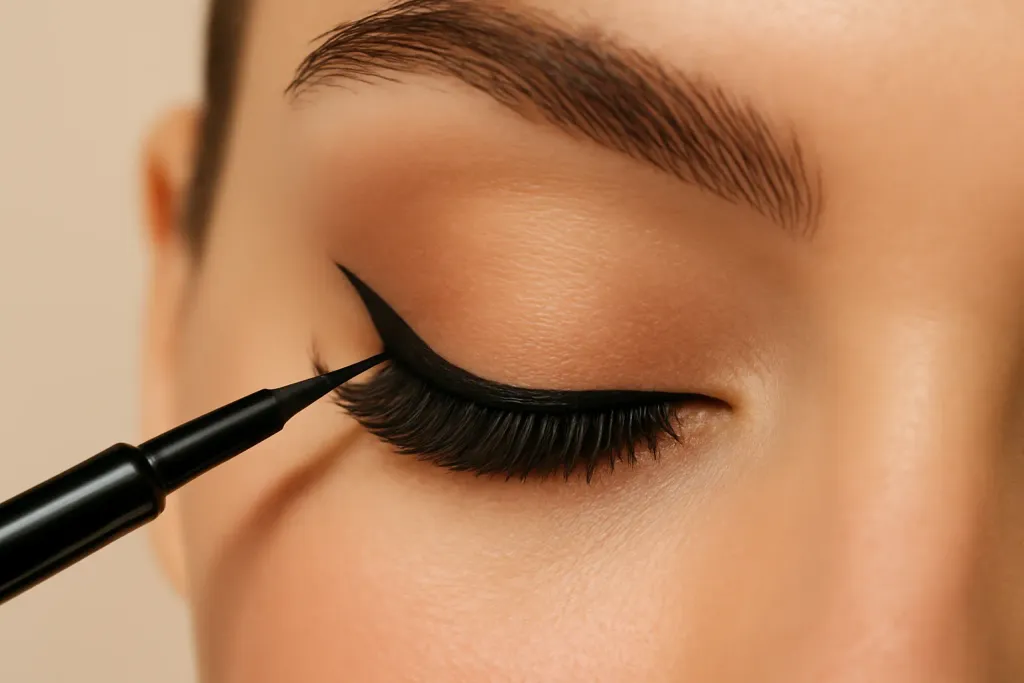
Why Eyeliner Helps Conceal a Lash Band
If you wear temporary false eyelashes, a visible lash band can make the whole look feel less seamless. That thin strip is necessary for structure, but when it shows through at the lash line, it can interrupt the effect you want. The good news is that eyeliner can soften that edge and help the lashes blend more naturally into your makeup.
The most useful approach is not to bury the band under a heavy line, but to make the lash line look fuller and more continuous. When people search for how to hide a lash band with eyeliner, they are usually trying to do three things at once: close any gaps at the root of the lashes, disguise the strip itself, and keep the eye shape looking clean rather than heavy. A smart eyeliner technique can support all three.
The key is balance. Too little liner may leave the band obvious. Too much can create a thick, blunt line that makes the false lashes look obvious in a different way. The goal is a soft, convincing transition between your natural lashes, the lash band, and the false fibers above it.
Choose the Right Eyeliner Type and Shade
Not every eyeliner works equally well for hiding a lash band. The best choice depends on how bold your false lashes are, how much definition you like, and how steady your hand is. A pencil can be forgiving for a softer look, while a gel or liquid formula can create a darker, more precise line. If you are learning how to hide a lash band with eyeliner, start with the formula you can control most comfortably.
Shade matters too. Black eyeliner can blend nicely with many lash bands, especially if the band is dark or the lashes are dramatic. Brown can look gentler and more natural if you want a softer finish or if the false lashes are wispy and subtle. Deep charcoal is another option when black feels too stark but brown feels too light. The right shade is the one that helps the lash line look unified without drawing attention to a sharp edge.
Finish can also change the effect. A matte or softly satin line often blends better than a very shiny one, which can reflect light and make the band more noticeable. If the eyeliner itself is too glossy, it may call attention to the lash line instead of disguising it.
Prep Your Lid So Liner Grips and Blends
Good prep makes a big difference in whether eyeliner helps hide the band or ends up slipping around it. Start with clean, dry lids so oil does not break down the makeup too quickly. If you use eye primer or a light dusting of translucent setting powder, apply it sparingly so the liner has a smoother surface to cling to. This can help create a cleaner line along the lash base.
If you are applying temporary false lashes, place them first or at least test-fit them before lining. That way you can see exactly where the band sits and avoid drawing the liner too high. For many people, the best result comes from working right into the lash roots rather than tracing a line above them. The closer the liner sits to the base, the more it helps the band disappear into the overall lash line.
It also helps to keep your natural lashes tidy before you begin. A quick comb through with a clean spoolie can separate the hairs so the eyeliner can reach the base more easily. If your own lashes are clumped together, the band can stand out more, especially at the center of the eye.
Step-by-Step Application for a Seamless Lash Line
To make the band less visible, begin with a thin line as close as possible to the root of your natural lashes. Work in small sections rather than trying to draw one perfect stroke. Short strokes usually give you better control and make it easier to fill gaps between lashes. This is especially helpful if your lashes are sparse or if the band is slightly thicker than you expected.
If you are wearing strip lashes, use the eyeliner to connect your natural lash base to the strip’s edge. Focus on the areas where the band is most likely to show, such as the inner corner, the center, and the outer edge. These spots often need a little extra attention because the band can lift slightly or sit at a different angle than the rest of the eye.
Once the base line is in place, you can gently build it up. Add a little more color only where you need it. The safest way to avoid a harsh finish is to stop before the line becomes thick. You want a fuller-looking lash line, not a heavy border. If needed, use a clean angled brush or cotton swab to soften any hard edges before the product sets.
For a more natural effect, lightly tap liner into the roots of your upper lashes with a small brush. That technique helps create the look of density at the lash line, which can make the band less noticeable without turning the eye makeup into a strong graphic look.
Browse our recommended products
Our featured picks refresh periodically. While we update them, our editorial guides can help you find the right pick.
See our guides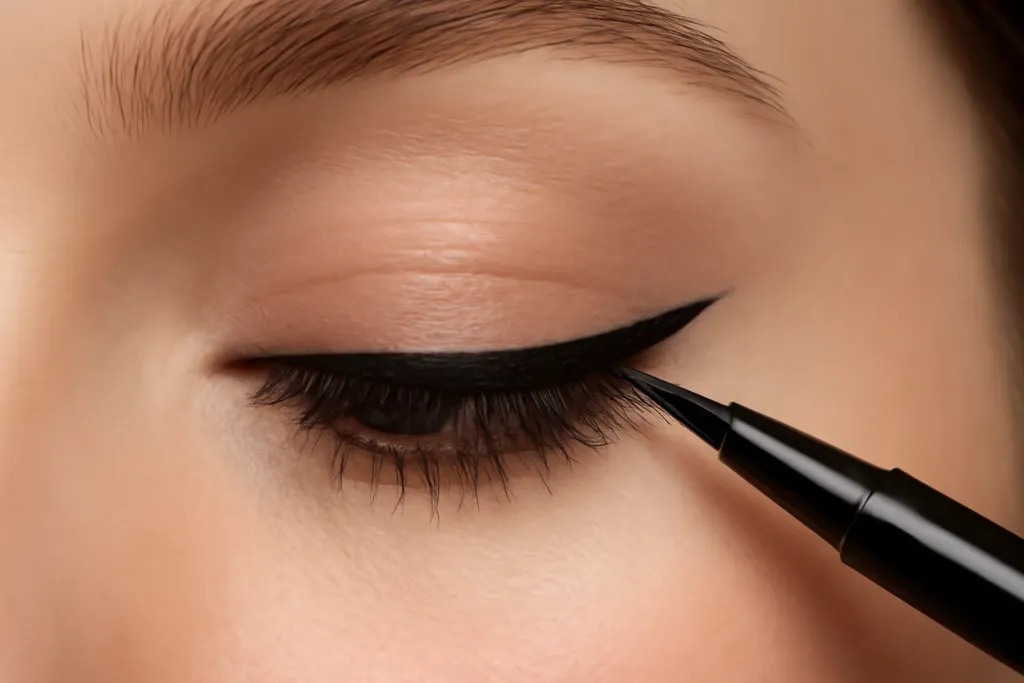
Work With the Lash Band Instead of Against It
The lash band itself can actually guide your eyeliner placement. If the band is thin, a narrow line of eyeliner may be enough to blend it. If the band is thicker, you may need to layer makeup more carefully so the band looks like part of the lash line rather than a separate strip. The trick is to match the visual weight of the liner to the lash style.
With dense or dramatic false lashes, a slightly stronger liner often looks more natural because it balances the heavier fibers above it. With wispy lashes, heavy liner can overpower the look and make the band more obvious by contrast. Think of the eyeliner as a bridge between your skin and the lashes. It should help connect the elements, not compete with them.
If your lashes have a clear or flexible band, they may already sit more discreetly, but eyeliner can still help by filling the color gap at the lash base. If the band is dark, use liner to reinforce the line so it reads as one continuous lash strip. Either way, the purpose is the same: keep the eye from showing a separate seam.
Small Adjustments That Improve the Finish
Once the main line is in place, a few small adjustments can make the result look much cleaner. Check the inner corners first, because that is where a band is often easiest to spot. If the lashes are slightly lifted there, add a touch more liner or press the band gently into place while the adhesive is still set enough to adjust. A tiny gap at the inner or outer edge can break the illusion, even if the center looks perfect.
You can also use eyeliner to disguise unevenness along the lash strip. If the lash band curves a little differently from your eye shape, the liner can smooth out the transition. A short second pass only where needed may be enough. Just keep the strokes light so you do not build a thick border.
For a softer finish, blend the upper edge of the liner slightly with a small brush. This can help the line melt into the base of the false lashes. If you prefer a more defined look, keep the line clean but make sure it is close enough to the roots that skin does not show between the liner and the band. Both methods can work; the best one is the one that looks most natural on your eye shape.
Common Mistakes That Make the Band More Visible
One common mistake is drawing the eyeliner too high above the lash line. That creates a gap between the liner and the band, which makes the strip easier to spot. Another is using a line that is too thick for the style of lashes you are wearing. A heavy line can look obvious even if it technically covers the band.
Another issue is uneven pressure. If one section of liner is dark and the rest is faint, the lash band may stand out in the lighter areas. Consistency matters more than intensity. A smooth, even line almost always looks better than a dramatic but patchy one.
Smudging too much can also work against you. While a little softening can help the lash line blend, over-smudging can create a messy edge that draws attention to the eye area. If your liner has spread beyond the intended zone, clean up the edges carefully rather than layering more product on top. And if your eyes start to sting, water, or feel persistently irritated, stop using the product and seek professional care if needed.
A Simple Routine for Better Lash Blending
If you want a repeatable routine for how to hide a lash band with eyeliner, keep it simple. Start with clean lids, choose a liner shade that matches the lashes you are wearing, place the strip lashes first, and then draw a thin line directly into the root area. Build only where the band still shows, and check the inner and outer corners before you finish.
This approach works well because it keeps the focus on the lash line itself. You are not trying to redraw the entire eye, just to make the false lashes look like they belong there. The cleaner the base, the more natural the final effect usually looks.
As you get more comfortable, you can adjust the method to fit different lash styles. A lighter liner may suit natural-looking lashes, while a more defined line may work better with fuller strips. Over time, you will learn how much liner your favorite lash styles need to look seamless without feeling overdone.